
Services · Companionship Care
Elderly Companion Care in Los Angeles: Good Company at Home
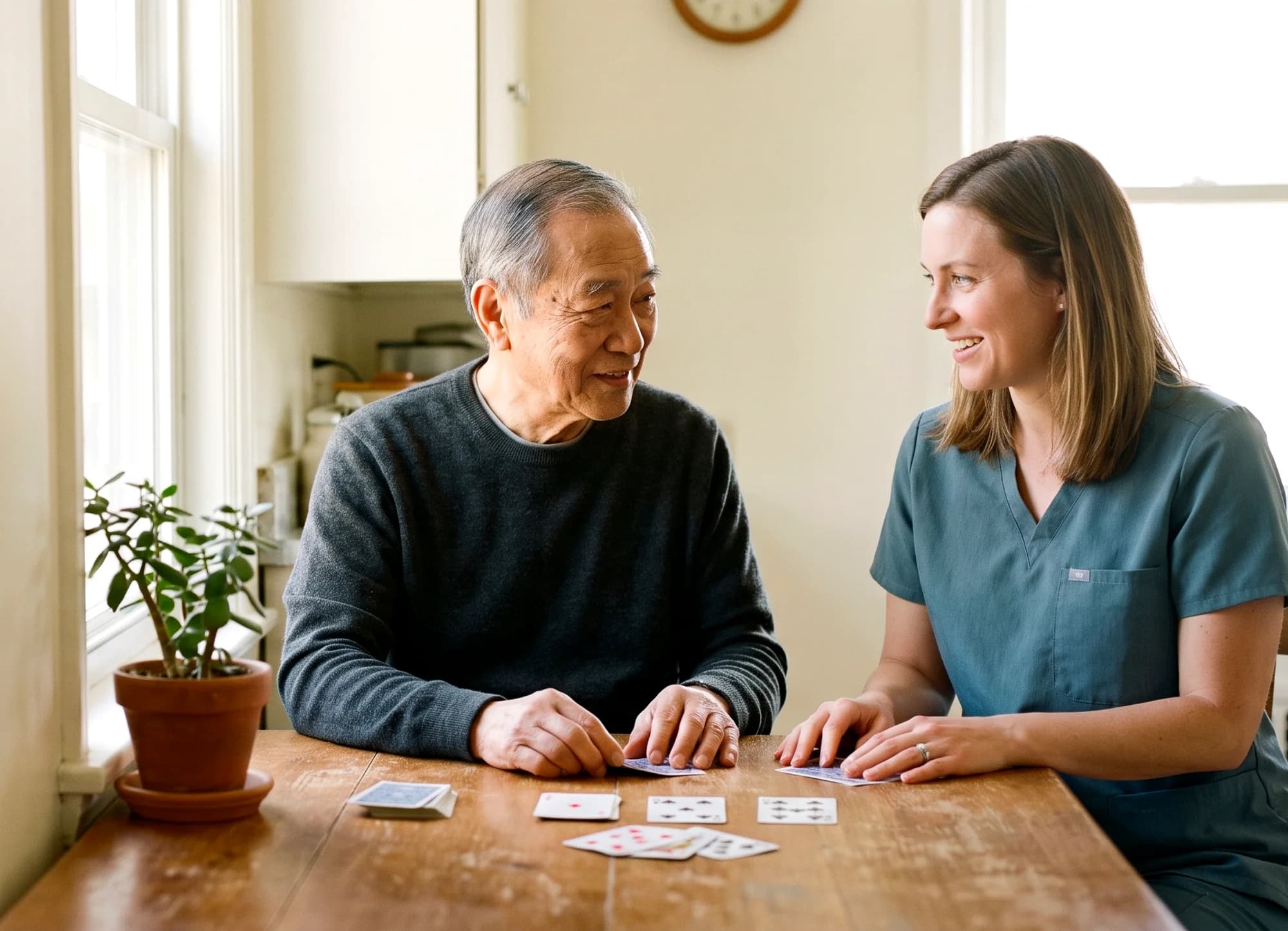
Elderly companion care means a friendly, trained caregiver spends time with your mom or dad at home: talking, sharing a meal, taking a walk around the block, playing cards, and keeping the house running. We're a family-owned agency in Redondo Beach, and for more than 30 years we've matched seniors across Los Angeles County with companions they actually look forward to seeing.
If your parent has gotten quieter since losing a spouse, or you live far away and worry about the long days alone, you're not overreacting. Loneliness is one of the most common reasons families call us, and companion care services are often where they start.
Tell us a little about your loved one, and we'll send a free written quote.

What is companion care?
Companion care is non-medical assistance at home: support, conversation and emotional connection for seniors, especially older adults living alone. It focuses on company, conversation and the everyday tasks that keep a household going. It doesn't involve medical care or medical tasks, and it isn't hands-on personal care, so a companion caregiver doesn't help with bathing or toileting. Instead, they bring structure, social connection and a familiar face to the day, and they keep an eye on how your loved one is really doing.
For a lot of older adults, that's exactly the right level of help. They're still mostly independent, but the days have gotten long and lonely, and small things have started to slip. Companionship care fills that gap, a few hours a week or every day, depending on what your loved one needs. It helps them live independently, with their dignity intact, in their own home.
What do companion care and homemaker services include?
Every plan is built around your loved one's interests and routine, and you approve it in writing first. Our companion care services, sometimes called homemaker services, usually include:
- Conversation and company, over coffee, a favorite show, or old photo albums. Sometimes it's just a listening ear.
- Shared activities: card games, puzzles, gardening, music, crafts and hobbies they've let go of. Games and puzzles are good mental stimulation, too.
- Walks and gentle exercise, to stay physically active and steady on their feet.
- Mental stimulation: reading together, crosswords, talking about the news.
- Meal preparation and company at the table, so meals actually get eaten. Meal prep can include planning the week's menu together.
- Light housekeeping and household tasks: laundry, dishes, tidying and changing the bed.
- Grocery lists, mail and phone calls: making the list, putting groceries away, sorting the mail, and staying in touch with family by phone or video chat.
- Medication reminders, plus help scheduling appointments by phone and keeping a calendar so there are fewer missed appointments.
- A safer house: spotting tripping hazards, clutter or a burned-out light before they cause a fall.
- A regular check-in the whole family can count on, with updates for you.
Why does companionship matter so much for seniors?
Because social isolation isn't a small thing. A 2020 National Academies report found that nearly one in four adults 65 and older is socially isolated, and it links isolation and loneliness to higher risks of heart disease, stroke, depression and dementia. For seniors living alone, it can also mean skipped meals and falls that nobody notices for hours. It can hit hard after the loss of a spouse, when friends have moved or passed away, or when family lives out of state.
A good companion gives emotional support and a reason to get dressed in the morning. Regular social interaction keeps the mind active and can lower the risk of anxiety and depression. Over time, many older adults build a meaningful relationship with their companion, and that social engagement supports their emotional well-being. Having someone to cook for, walk with or laugh with makes a real difference to quality of life and mental health. These are the years your parent should be enjoying, not spending alone.
What are the signs an aging loved one could use a companion?
These are the things families tell us they noticed first:
- 01Days pass without real conversation, especially after losing a spouse.
- 02Hobbies and outings have stopped. Withdrawal from things they once enjoyed is a warning sign, not just a preference.
- 03The house is slipping: mail piling up, an untidy kitchen, old food in the fridge.
- 04Meals are skipped or replaced with snacks.
- 05They sound flat on the phone, or call you much more, or much less, than they used to.
None of these mean your parent can't live at home. They usually mean they need more company and a little more support.
Not sure if companion care is enough? Call and talk it through. A real person answers 24/7.
Good company
The visit they start looking forward to.


How is in-home companion care different from personal care or home health?
In-home companion care is about company and household help. Personal care is hands-on help with bathing, dressing, toileting and moving safely. Many families start with companionship and add personal care later as needs change, often with the same caregiver and an adjusted plan. Because we offer both, your loved one doesn't have to get used to a new face when needs grow.
Home health is different again. Home health aides and a registered nurse visit for skilled, doctor-ordered care, usually for a short time. Companion care can sit alongside that, and for some families it helps put off a move to an assisted living facility or nursing home.
If your parent has memory loss, a companion who understands dementia matters. See our dementia home care for how that works.
How do you choose the right senior companion?
Caregiver matching matters more for companion care than almost anything else we do, because the whole point is a relationship. We look for compassionate caregivers first. We pair people on personality and interests as much as skill. A retired engineer who loves baseball may need a different companion than a former teacher who loves to garden. When you're choosing any companion care provider, ask how they screen and match caregivers, and whether you can try a few visits before committing. Treat the first few weeks as a trial: if the match isn't right, tell us and we'll change it.
Every caregiver is a state-registered home care aide with at least two years of verified experience, with DOJ and FBI fingerprint background checks. We're a licensed California Home Care Organization (HCO #194700757), bonded and insured. We introduce the companion before the first visit.
How does companion care help family members?
It takes some of the weight off you. If you live far away, a companion who sees your loved one through regular visits notices early changes in memory, mood or appetite that a weekly phone call can miss, and lets you know. If you live close, it gives you back time for your own life, your work and your kids, so your visits can be about connection instead of daily tasks. Either way, family members get reliable support and real peace of mind. If you're the main family caregiver and need a longer break, see our respite care.
How much does companion care cost?
It depends mostly on how many hours a week you need. We don't publish our rates, because the honest number depends on your schedule. For context, a non-medical caregiver in California has traditionally cost about $40 an hour, the state median in CareScout's 2025 Cost of Care Survey.
Companion care is often the most affordable level of home care, because many families only need a few visits a week. We typically quote lower than traditional market rates, there's no long-term contract, and you'll get a free written quote after we meet, with no hidden fees. Medicare doesn't pay for companion care, but long-term care insurance and VA benefits sometimes help. Our guide to in-home care costs in Torrance and the South Bay has more detail.
How do we get started?
- 01Call us, or fill out the short form. Tell us about your loved one: their routine, what they enjoy, what's been worrying you.
- 02Meet in person or over Zoom. Whichever is easier, especially if family is spread out.
- 03Free in-home assessment. We learn their interests and preferences and write a care plan tailored to them. You approve it, and we adjust it as needs change.
- 04Meet the companion. We introduce them first, and the visits start on a schedule that works for your family.
Where do you provide companion care in Los Angeles?
All of Los Angeles County, with our deepest coverage in the South Bay: Torrance, Redondo Beach, Manhattan Beach, Hermosa Beach, the Palos Verdes Peninsula and El Segundo, as well as Long Beach, Santa Monica and Pasadena.
Questions
Questions families ask about companion care
Can a companion caregiver also help with bathing?
Companion care is non-hands-on. If personal care is needed, we move to a personal care plan, often with the same caregiver and an adjusted scope.
How few hours can we book?
Some families start with a single weekly visit of a few hours. We'll suggest a rhythm that is genuinely useful rather than selling hours you don't need.
Will it be the same companion every time?
That's the goal. A familiar face is the whole point of companion care, so we keep the same companion whenever we can, with a trained backup your loved one has met.
What if my parent says they don't need company?
That's very common. We often introduce the companion as help around the house, and the friendship grows from there. Many seniors warm up once they get to know the person.
Can companion care help a parent with early memory loss?
Yes. Routine, conversation and gentle activity are good for people in the early stages of dementia. As needs grow, we can move to memory care at home.
Rather just talk it through?
One short call is usually all it takes to know what fits. No forms, no script.
Call (310) 940-0191Speak to a care advisor
Tell us a little about what's been happening and we'll call you back today.
Other services
Care that often goes alongside
Someone good, on their side
Tell us about your mom or dad: what they love, what they've stopped doing, and what worries you. We'll listen, answer honestly, and help you decide if elderly companion care is the right fit.
Get a free written quote, or call us now. A real person answers 24/7.