Services · Personal Care
Personal Care at Home in Los Angeles, With Dignity Intact
Personal care at home means a trained caregiver helps your mom or dad with the private parts of the day that have gotten hard: bathing, dressing, grooming, using the bathroom and moving around safely. We're a family-owned agency in Redondo Beach, and for more than 30 years we've helped families across Los Angeles County keep a parent clean, comfortable and safe in their own home, without anyone losing their dignity along the way.
If you're here because a shower has started to feel risky, or because you've been helping your mother bathe and you both feel awkward about it, you're not alone. This is one of the most common reasons families call us.
Tell us what's been getting harder, and we'll send a free written quote.
What is personal care at home?
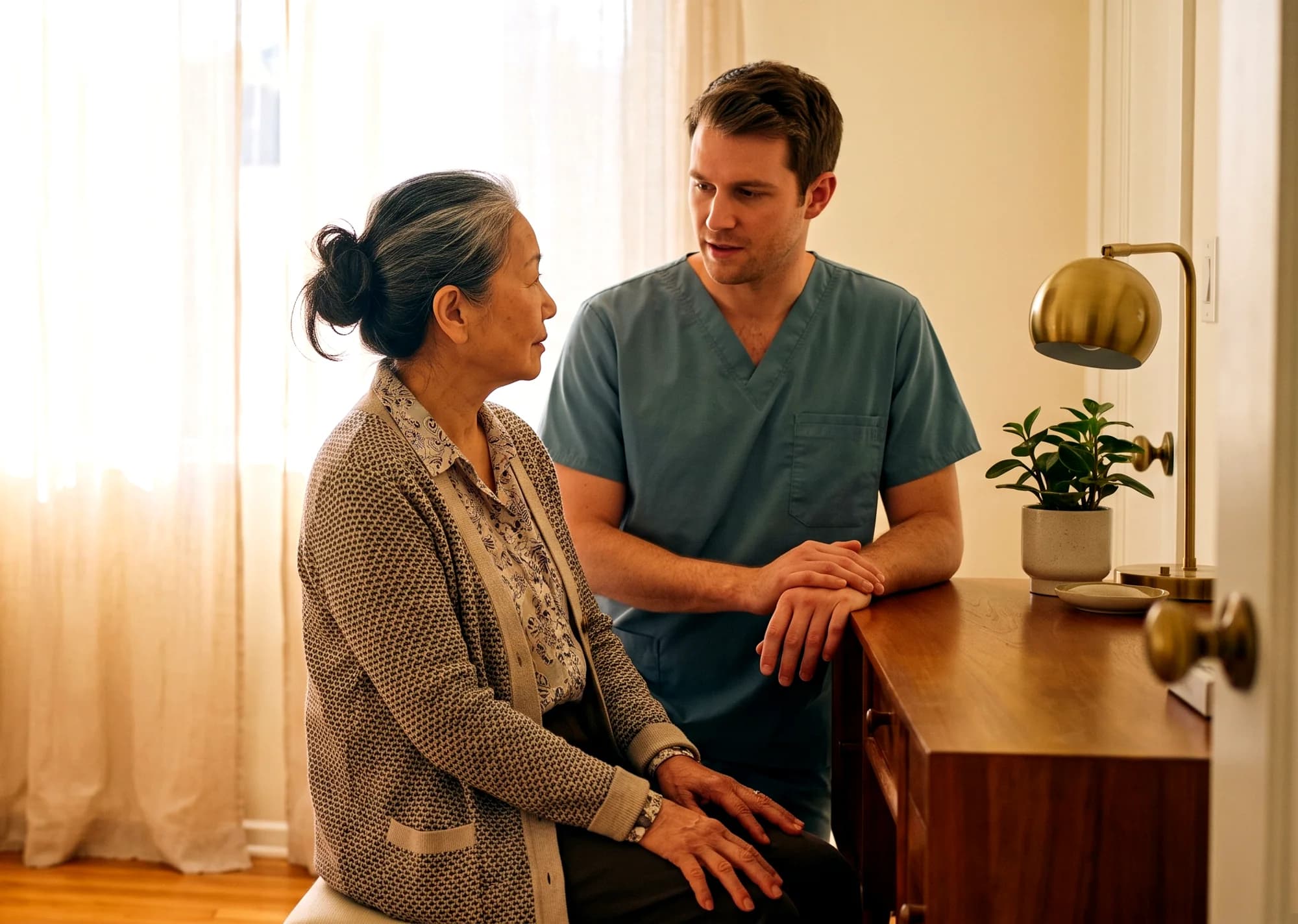
Personal care is non-medical, hands-on help with activities of daily living. That's the everyday routine most of us never think about until it becomes hard: getting in and out of the shower, brushing teeth, shaving, getting dressed, using the toilet, and moving from bed to chair. Some seniors only need a steady hand nearby. Others need full assistance. Our caregivers adjust to whatever your loved one needs today, and the care plan is tailored to them and changes as their needs change.
It's done in your loved one's own home, on their schedule, with their own towels and their own routine. Caregivers assist with the tasks your parent finds hard and support them in doing the rest. For a lot of families, personal care is the thing that lets a parent keep living at home instead of moving to a facility.
What does a personal care assistant help with?
A personal care assistant (we just call them caregivers) can assist with any of these tasks:
- Bathing and showering, from standing by to full assistance, including hair washing.
- Personal hygiene and grooming: oral care, shaving, skin care, nails and hair.
- Dressing, with clothes your loved one chooses. Simple swaps like Velcro shoes or elastic waistbands help them do more on their own.
- Toileting and incontinence care, handled calmly and privately.
- Mobility and transfers: getting up, walking safely, and positioning for clients who are bed-bound.
- Meal preparation, including special diets, and company at the table.
- Medication reminders, so doses aren't skipped or doubled.
- Fall prevention throughout the house, plus light tidying so paths stay clear.
You read and approve a written care plan before anyone starts, so you know exactly which tasks are covered.
How do caregivers make bathing safer for seniors?
The bathroom is where a lot of falls happen, and wet tile and a tub edge are a real risk for seniors. Fear of falling is one of the biggest reasons older adults start skipping showers. Bathing assistance for elderly parents starts with the room itself. At the assessment we look at the shower and point out what would help, like grab bars by the tub and toilet, shower chairs or a transfer bench, a non-slip mat, or a handheld shower head. Simple tools like these make a big difference for safety, and you decide what to add.
Then it's about how the bath happens. The caregiver gets the water temperature right, keeps towels and clothes within reach, helps your loved one sit down and stand up, and stays close enough to steady them. They keep them covered as much as possible and let them do whatever they can on their own. Many seniors don't need a daily shower. Bathing two or three times a week, with washing up in between, is common, and the right rhythm is something to talk over with their doctor. Afterward, gentle cleansing and a good moisturizer protect older, drier skin. We'll fit the routine to their skin, energy and preferences, and keep the bathroom well lit and the floor dry.
What if my parent refuses help with bathing or personal hygiene?
This is very common, and it usually isn't stubbornness. It's fear of falling, embarrassment, feeling cold, or grief about needing help at all. For someone with memory loss, the shower itself can cause real anxiety. Pushing harder rarely works, and it can leave everyone upset.
What does work is patience, respect and a respectful, unhurried caregiver. Our caregivers take time to build trust before they ever help with a shower. They explain each step, offer choices ("now or after breakfast?"), keep the room warm, and protect privacy. Sometimes a sponge bath is the right answer for now. Your parent's feelings matter here, and so does their sense of control. Caregivers watch for signs of discomfort or anxiety and slow down. We'll also discuss any concerns with you, because you know your mom or dad best. If your parent says no to you, they may say yes to a calm professional who isn't their child.
Worried about how your parent will take it? Call and talk it through. A real person answers 24/7.
In the home
Help with the ordinary things, handled with care.
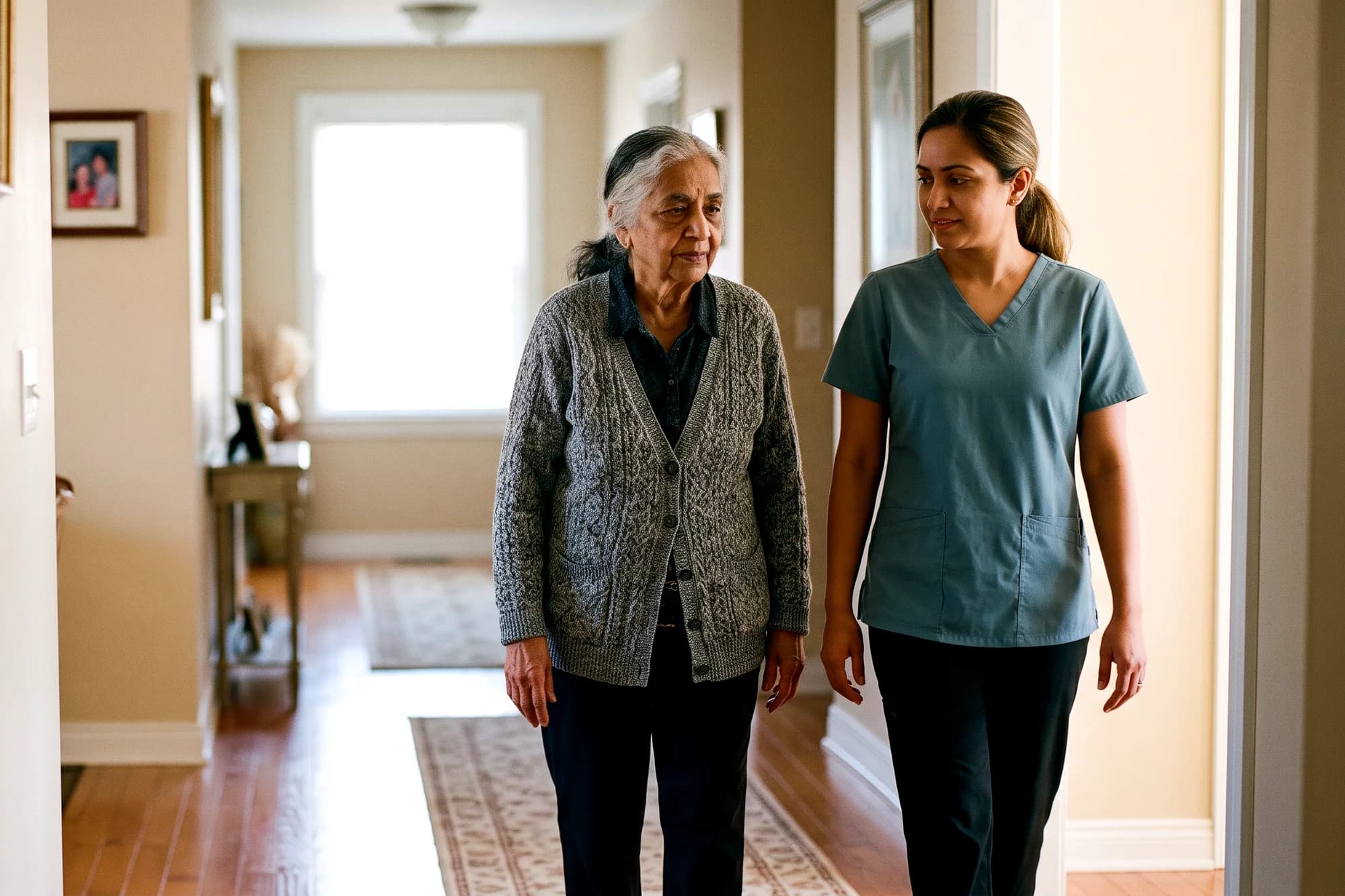
How does personal care protect independence and well-being?
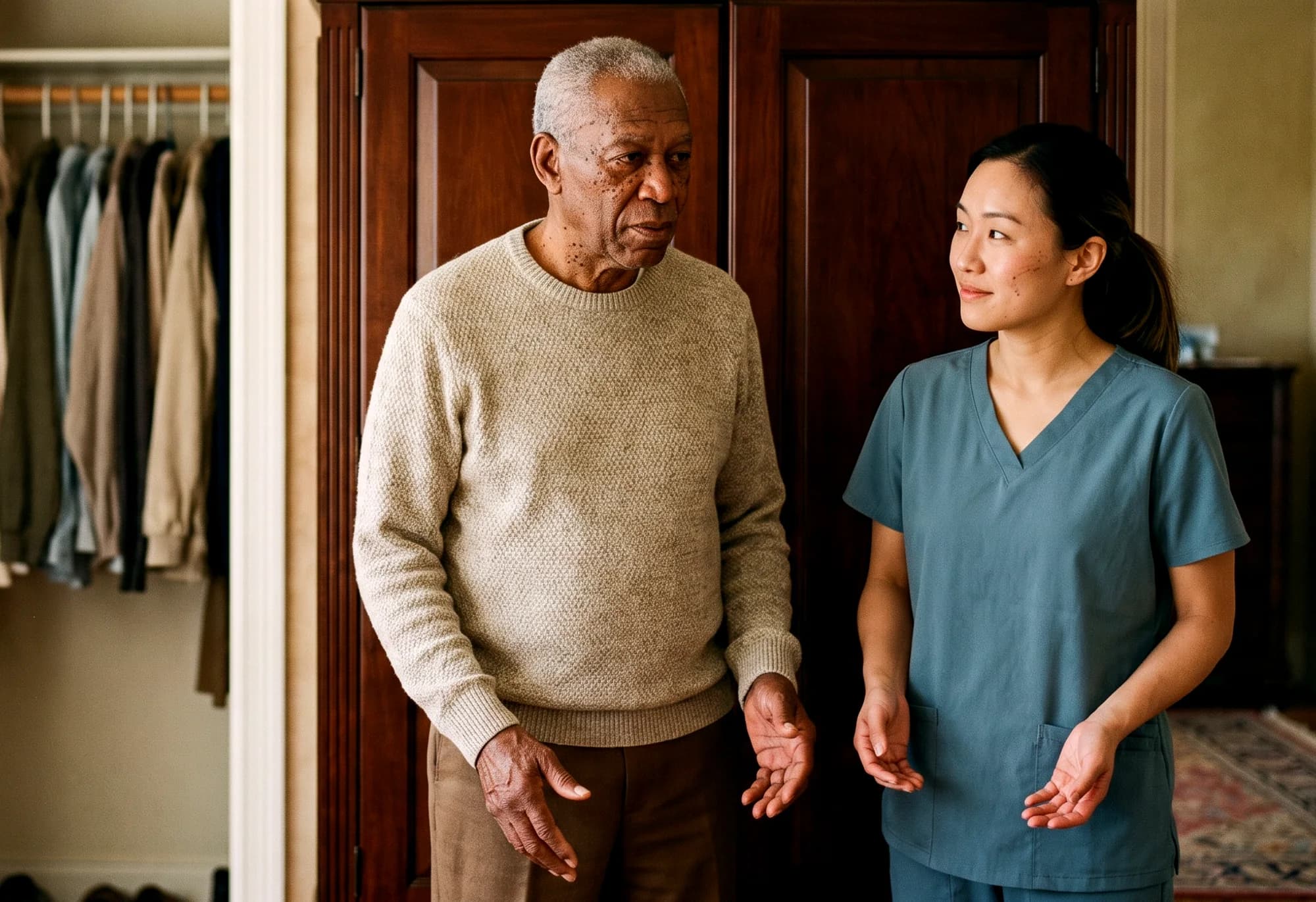
Good personal care isn't about doing everything for someone. It's about helping with the hard parts so your loved one can keep doing the rest. Feeling clean, dressed and put together does a lot for a person's mood and self-respect. Staying active and moving safely protects their overall health and lowers the risk of falling or an injury. It supports their overall well-being, too: dignity, routine and a sense that their life is still their own.
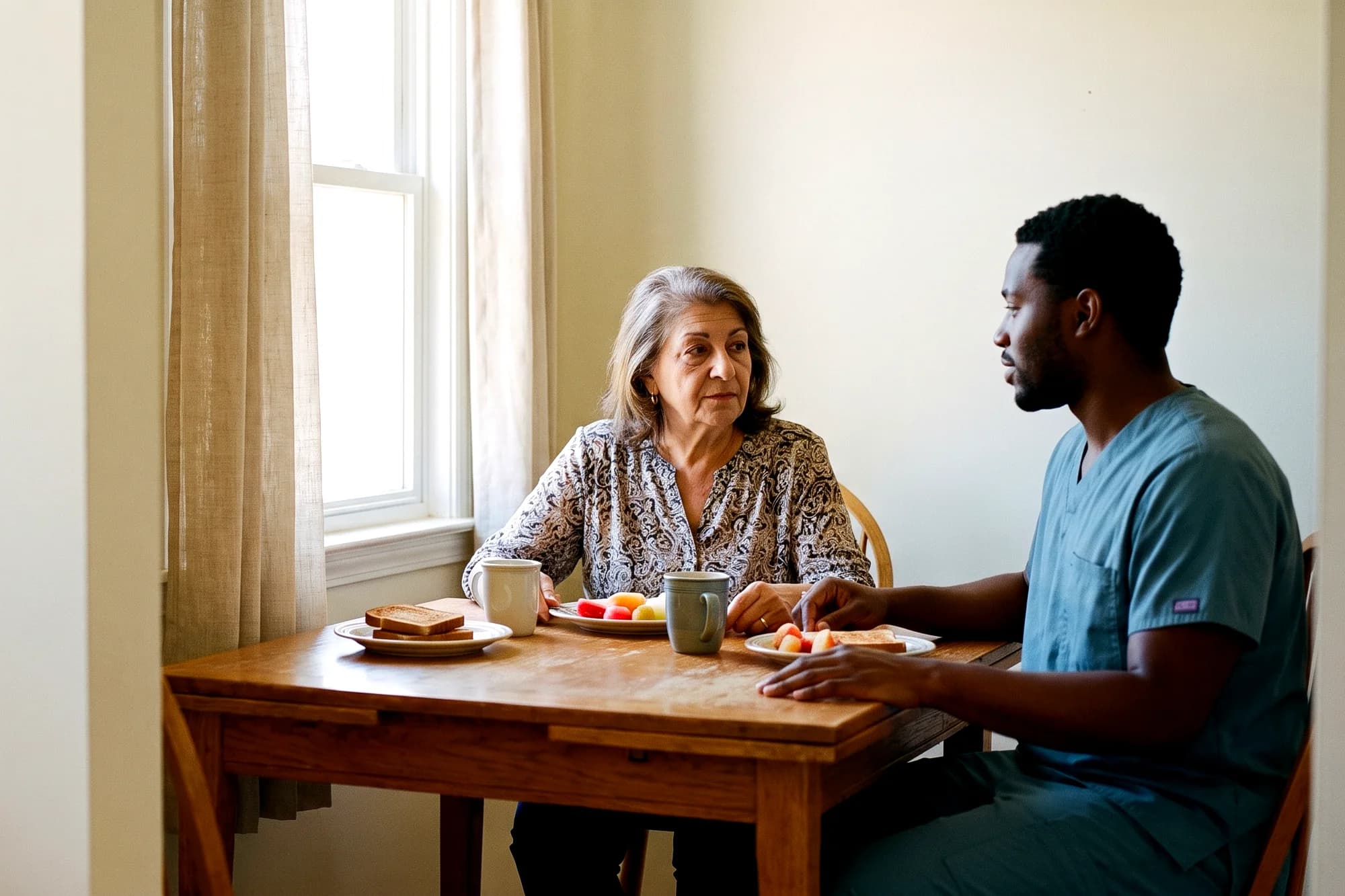
Small daily routines add up, too. Caregivers encourage a glass of water through the day, protein at meals, a short walk or a few minutes of gentle movement, and a calm, regular bedtime, all of which help with energy, sleep and skin. Just as important is the company. A caregiver who chats over breakfast eases loneliness, and that social contact lowers stress and lifts quality of life.
Personal care also helps catch small health issues early. A caregiver who helps with bathing is often the first to notice a skin change, a new bruise, or that someone isn't eating. We let you know, so you can call the doctor before it turns into a hospital visit. And you get your role back: you can visit as a son or daughter, not as the person who has to help mom in the shower.
Is personal care the same as home health care or a nursing home?
No. Personal care is non-medical help at home. Home health care is skilled care, like nursing or physical therapy, that a doctor orders, usually for a short time after a hospital stay or an injury. Many families use both, and our caregivers work alongside home health providers and other care providers when they're involved.
A nursing home is a facility with round-the-clock skilled nursing. Some people do need that. But many older adults who mainly need help with bathing, dressing and getting around can stay safely at home with the right support, for a few visits a week or up to 24 hour home care.
How much does personal care at home cost?
It depends mostly on how many hours a week your loved one needs. We don't publish our rates, because the honest number depends on the care plan. For context, a non-medical caregiver in California has traditionally cost about $40 an hour, the state median in CareScout's 2025 Cost of Care Survey.
We typically quote lower than traditional market rates, there's no long-term contract, and you'll get a free written quote after we meet. Our guide to in-home care costs in Torrance and the South Bay goes deeper on local numbers.
Does Medicare pay for personal care services?
Usually not. Medicare doesn't cover ongoing non-medical personal care, including help with bathing, when that's the only care someone needs. It can cover short-term home health visits a doctor orders. Most families pay privately. Long-term care insurance often covers personal care services at home, and eligible veterans may have VA benefits. Medi-Cal's In-Home Supportive Services (IHSS) program may pay for some hours for people who qualify. Rules change, so check with each program directly, and we're happy to help you read a policy.
How does the assessment process work?
- 01Call us, or fill out the short form. Tell us what's been getting harder at home.
- 02Meet in person or over Zoom. Whichever is easier for your family.
- 03Free in-home assessment. We look at safety in the bathroom and the rest of the house, talk through your loved one's routine and preferences, and write a care plan you approve.
- 04Meet your caregiver. We introduce them before the first visit and keep a small, steady team, so familiar faces come through the door.
Our caregivers are compassionate, trained professionals. Every caregiver is a state-registered home care aide with at least two years of verified experience, with DOJ and FBI fingerprint background checks. We're a licensed California Home Care Organization (HCO #194700757), bonded and insured. If the fit isn't right, we'll change it.
Where do you provide care in Los Angeles County?
All of Los Angeles County, with our deepest coverage in the South Bay: Torrance, Redondo Beach, Manhattan Beach, Hermosa Beach, the Palos Verdes Peninsula and El Segundo, as well as Long Beach, Santa Monica, Pasadena and communities in between. Not sure we cover your community? Contact us and ask. If your loved one also has memory changes, see our dementia home care.
Questions
Questions families ask about personal care
Will the same caregiver come every visit?
Yes, as much as we can. Consistency is the point for seniors who need personal care support. We build a small, regular team around each of our clients so familiar faces come through the door, with trained backup for illness or vacation.
Is personal care medical care?
No. Personal care is non-medical support with activities of daily living. If skilled nursing is ordered by a physician, we coordinate alongside the home health agency.
Can I hire someone just to help my parent with a bath?
Yes. Some families book bathing assistance alone, just for showers and getting dressed. We'll suggest a schedule that keeps your loved one safe without selling hours you don't need.
What is the minimum number of hours?
Most families start with a few visits a week. We'll tell you honestly on the first call what schedule makes sense and what we can staff.
Can personal care help after a hospital stay?
Yes. Call as soon as you have a discharge date. We can often start the same day or the next, and adjust the care plan as recovery goes. See our disability and recovery care for more.
Rather just talk it through?
One short call is usually all it takes to know what fits. No forms, no script.
Call (310) 940-0191Speak to a care advisor
Tell us a little about what's been happening and we'll call you back today.
Other services
Care that often goes alongside
Help with the hard parts, kept private
Tell us what mornings and bath time look like right now. We'll listen, answer honestly, and help you decide how much personal care makes sense.
Get a free written quote, or call us now. A real person answers 24/7.