
Services · Disability & Recovery Care
Disability Home Care and Recovery Support in Los Angeles
Disability home care means a trained caregiver helps an adult living with a disability, or someone recovering from surgery or a hospital stay, with the daily tasks that have become hard to manage alone. We're a family-owned agency in Redondo Beach, and for more than 30 years we've supported adults of every age across Los Angeles County: people with physical or developmental disabilities, and people getting back on their feet after a hospital discharge.
If a discharge planner just told you your dad is coming home tomorrow, or you've been the only support for a family member with a disability and you're running on empty, take a breath. This is exactly the kind of call we take every week.
Tell us what's happening, and we'll send a free written quote. Coming home from the hospital? Call now.

What is in-home care for disabled adults?
It's non-medical, hands-on support at home, built around one person's condition, routine and goals. Our caregivers help with personal care, mobility, meals, medication reminders and the household, so your loved one can stay safe and as independent as possible in a familiar place. Being in their own home, with their own things, also tends to mean less anxiety than a facility.
Good disability care isn't about taking over. It's about helping with the parts that are hard and stepping back from the parts your loved one can still do, whether that's dressing themselves with a little extra time or cooking with someone close by.
What do in-home care services for disabled adults include?
Every care plan is personalized and written down, and you approve it before anyone starts. Depending on the person, our in-home care services can include:
- Transfers, mobility support and wheelchair assistance, including help in and out of bed, chairs and the shower.
- Personal care adapted to the condition: bathing, toileting, dressing and grooming.
- Medication reminders, so doses aren't missed or doubled.
- Meal preparation for prescribed or restricted diets.
- Exercise reminders from the physical therapist's home program, done safely.
- Light housekeeping so the home stays safe to move through.
- Companionship and conversation, because isolation is hard on anyone.
- Coordination with home health nurses and therapists, so everyone stays informed.
We care for adults with spinal cord injuries, MS, Parkinson's, stroke recovery, amputations, developmental disabilities and many other conditions. Call us and describe the situation. We'll tell you honestly whether we're the right fit.
What does post operative home care look like?
After surgery, the goal is a safe recovery at home without a second setback. Post operative home care covers the daily routine your doctor's discharge instructions describe: rest, hydration, meals, getting up and walking safely, and reminders about wound care and medications. The caregiver doesn't change dressings or give injections, which are skilled nursing tasks, but they make sure nothing gets forgotten between nurse visits.
Common reasons families call us: a hip or knee replacement, back surgery, heart surgery, a fall with a fracture, or a long hospital stay that left someone weaker than before. Two weeks of recovery care is a completely normal engagement for us.
How does post hospital care at home prevent readmission?
The first few days home are often the riskiest. People come home tired, on new medications, and unsteady on their feet. Medication mix-ups are a common reason people end up back in the hospital, along with falls and missed warning signs.
A caregiver at home helps in simple, practical ways:
- 01Medications are organized and taken on schedule, with reminders.
- 02Falls are less likely, because someone is there for getting up, the bathroom and the stairs.
- 03Meals and fluids actually happen, which matters a lot for healing.
- 04Warning signs get noticed, like new confusion, swelling, fever or pain, and you hear about them right away so you can call the doctor.
Discharge planners often give families only a day or two of notice. Call us as soon as you have a discharge date. We arrange same-day and next-day starts after a hospital discharge all the time.
Have a discharge date? Call now and we'll tell you right away what we can staff. A real person answers 24/7.
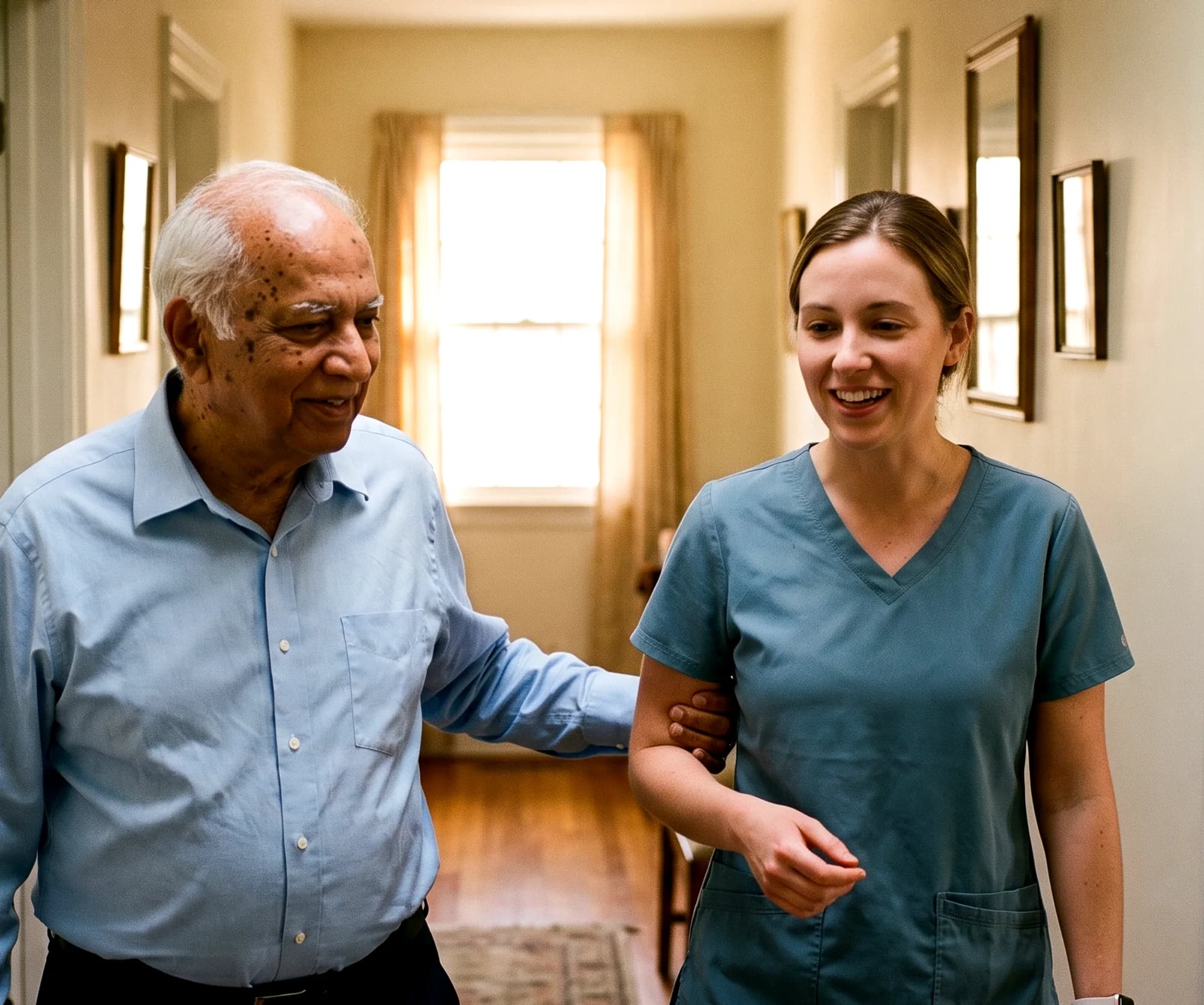
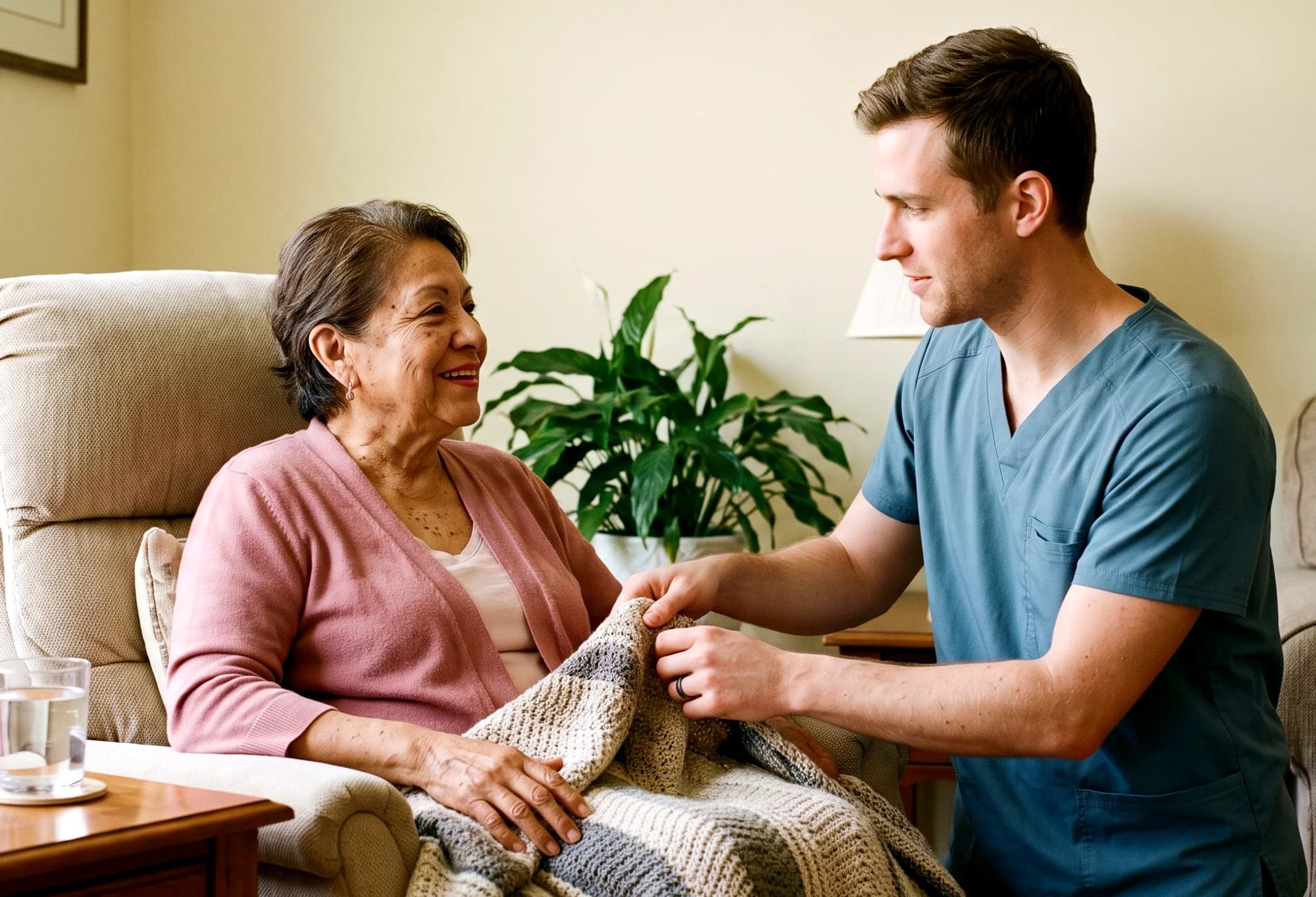
Getting back on your feet
Support built around the specific condition.

Is non-medical home care the same as home health?
No, and the difference matters. Home health is skilled medical care at home, like nursing, physical therapy or occupational therapy, ordered by a doctor. Medicare covers home health when a doctor orders it and the person qualifies, usually for short visits.
Non-medical home care is what fills the rest of the day: help with activities of daily living, meals, safety and company. A home health nurse may visit for an hour twice a week. A caregiver can be there for the hours in between. Many families use both, and we work alongside home health agencies so the care plan stays consistent.
How do you make the home safer for recovery or a disability?
At the free in-home assessment we walk through the house with you and look for the things that cause falls: loose rugs, cords across walkways, poor lighting, a slippery tub, and stairs without a sturdy rail. We'll point out where grab bars, a shower chair, a raised toilet seat or a bedside commode could help. Sometimes simple home accommodations and assistive devices reduce how many caregiving hours you actually need, and we'll tell you that.
How does disability home care support independence?
We follow your loved one's lead. Caregivers encourage them to do what they can, at their own pace, and step in only where help is needed. That might mean setting things up so they can dress themselves, or helping with the transfer but letting them handle the rest of the shower.
Independence also means a life outside the routine. Caregivers help people stay connected with friends, family and the things they enjoy, from video calls to hobbies at home. Social inclusion matters for mental health, and emotional support from a steady caregiver can ease anxiety and low mood during a long recovery.
Can you give our family caregiver a break?
Yes. If you're the main support for a family member with a disability, you need rest too. We provide relief for a few hours a week, overnight, or for a longer stretch while you travel or recover yourself, short-term or ongoing. It helps prevent caregiver burnout and keeps the routine steady. See our respite care for more.
How much does disability home care cost, and who helps pay?
It depends on how many hours of care your loved one needs and for how long. We don't publish our rates, because the honest number depends on the care plan. For context, a non-medical caregiver in California has traditionally cost about $40 an hour, the state median in CareScout's 2025 Cost of Care Survey. We typically quote lower than traditional market rates, and you'll get a free written quote with no long-term contract.
Some programs may help. Medi-Cal's In-Home Supportive Services (IHSS) can pay for some personal care and household help for people who qualify. Long-term care insurance, VA benefits and some disability insurance policies may cover non-medical home care. Medicare usually doesn't pay for ongoing non-medical care. Rules change, so check with each program directly, and we're happy to help you read a policy.
How do we get started?
- 01Call us, or fill out the short form. Tell us about the condition, the discharge date if there is one, and what help is needed.
- 02Meet in person or over Zoom. Whichever is faster for your family.
- 03Free in-home assessment. We look at safety, routines and the discharge instructions, and write a care plan you approve. We'll reassess as recovery goes and adjust the plan.
- 04Meet your caregiver. We introduce them before the first shift whenever time allows.
Every caregiver is a state-registered home care aide with at least two years of verified experience, with DOJ and FBI fingerprint background checks. We're a licensed California Home Care Organization (HCO #194700757), bonded and insured.
Where do you provide disability and recovery care?
All of Los Angeles County, with our deepest coverage in the South Bay: Torrance, Redondo Beach, Manhattan Beach, Hermosa Beach, the Palos Verdes Peninsula and El Segundo, as well as Long Beach, Santa Monica and Pasadena. If round-the-clock help is needed, see our 24 hour home care.
Questions
Questions families ask about disability and recovery care
Can you start on the day of discharge?
Frequently, yes. Call us as soon as a discharge date is set and we'll tell you immediately what we can staff.
Do you work with home health nurses?
Yes. We handle the non-medical daily support alongside skilled nursing or therapy visits, and we keep both sides informed.
Is short-term care welcome?
Absolutely. Two weeks of recovery care is a completely normal engagement for us.
Do you care for younger adults with disabilities?
Yes. Our care isn't only for seniors. We support adults of any age living with a physical or developmental disability.
Can the same caregiver stay through the whole recovery?
That's our goal. We keep a small, steady team, so your loved one isn't meeting a new person every day.
Rather just talk it through?
One short call is usually all it takes to know what fits. No forms, no script.
Call (310) 940-0191Speak to a care advisor
Tell us a little about what's been happening and we'll call you back today.
Other services
Care that often goes alongside
Home, with the right help
Tell us what the doctor said and what worries you most. We'll listen, answer honestly, and help you plan the next few weeks, or the long run.
Get a free written quote, or call us now. A real person answers 24/7.