
Aged Care · Redondo Beach & the South Bay
Aged Care in Redondo Beach for Life's Later Chapters
Getting older doesn't erase who someone is. Your dad is still the man who tells the same fishing story with a grin. Your mom still hums while she folds the napkins. Some things just take more help now.
Our in-home aged care in Redondo Beach is built for that season of life. We support seniors through changes in memory, mobility, and energy with patience, warmth, and the steady presence of a caregiver who truly gets to know them.

- 30+ years caring for South Bay seniors
- Licensed CA HCO #194700757
- State-registered, background-checked caregivers
What Aged Care Means at Around The Clock
Aged care is support for seniors whose needs have grown deeper than a few chores or a weekly check-in. It's about connection, supervision, and gentle help with the changes that come with later life.
ServiceSenior Companionship Services
What It's ForEasing loneliness through real friendship and conversation
ServiceCognitive Engagement
What It's ForKeeping the mind active with meaningful, enjoyable activities
ServiceDressing Assistance
What It's ForHelping seniors get dressed comfortably as stiffness or memory changes set in
ServiceAlzheimer's and Dementia Support
What It's ForCalm, consistent care for people living with memory loss
Service24-Hour Home Care
What It's ForContinuous coverage for seniors who can no longer be alone
| Service | What It's For |
|---|---|
| Senior Companionship Services | Easing loneliness through real friendship and conversation |
| Cognitive Engagement | Keeping the mind active with meaningful, enjoyable activities |
| Dressing Assistance | Helping seniors get dressed comfortably as stiffness or memory changes set in |
| Alzheimer's and Dementia Support | Calm, consistent care for people living with memory loss |
| 24-Hour Home Care | Continuous coverage for seniors who can no longer be alone |
Senior Companionship Services
Loneliness can creep in quietly after a spouse passes, friends move away, or driving stops. Days get long, and conversations get shorter.
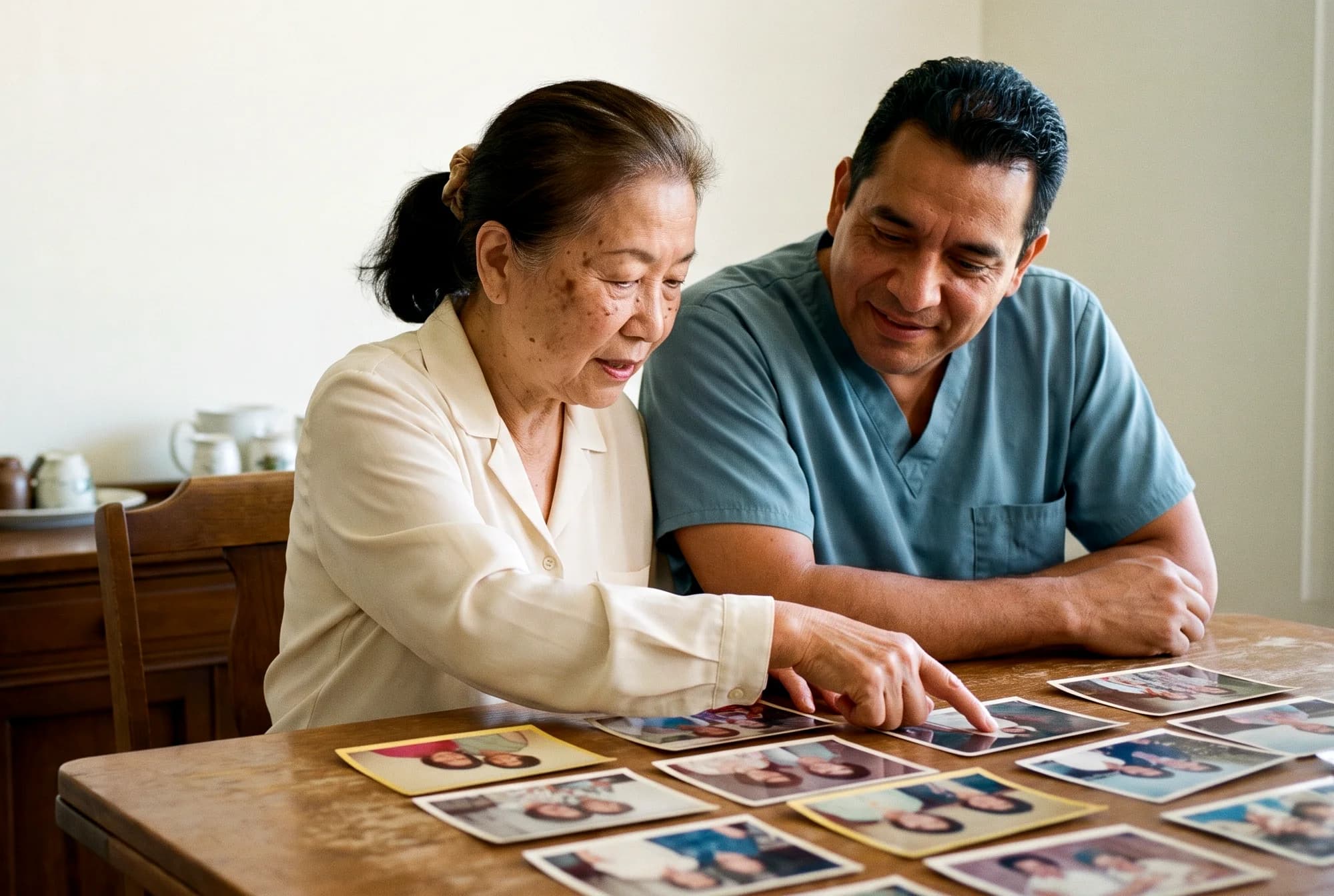
Our companions bring back the simple pleasure of good company. They listen to the old stories like it's the first time, share a cup of coffee, play cards, and notice when your loved one seems a little down.
What companionship can look like:
- Long talks over coffee or lunch
- Card games, crosswords, and favorite TV shows together
- Walks around the neighborhood or time out in the garden
- Looking through photo albums and family keepsakes
- Helping write letters or cards to family and friends
Cognitive Engagement
Companionship warms the heart. Cognitive engagement gives the mind something to work on. These are purposeful activities chosen to match your loved one's interests and abilities, so they feel like fun rather than exercises.
Activities we often use:
- Puzzles, word games, and trivia
- Reading aloud and talking about the story
- Music from their younger years, and singing along
- Simple cooking, baking, or gardening projects
- Sorting, organizing, or crafts that use the hands and mind together
We pay attention to what lights them up, and we do more of that.
Dressing Assistance
Getting dressed seems simple until arthritis makes buttons hard, balance makes socks risky, or memory makes the order of clothes confusing. Our caregivers help in a way that keeps your loved one in charge of how they look and what they wear.
How we help:
- Laying out clothes the night before, with your parent choosing
- Helping with buttons, zippers, shoes, and socks
- Offering a steady arm while they change, to prevent falls
- Gentle step-by-step cues for those with memory changes
- Making sure clothing fits the weather and the day's plans
Wondering which kind of support your parent needs right now? Let's talk it through together.
Alzheimer's and Dementia Support
Memory loss changes a family in ways that are hard to put into words. Your loved one may ask the same question again and again, feel unsettled in the evening, or not recognize a familiar room.
Our caregivers meet those moments with calm instead of correction. They follow familiar routines, keep the home peaceful, and gently guide your loved one through the day, so they feel safe even when things feel confusing.
What our dementia support includes:
- Consistent daily routines and familiar caregivers
- Patient redirection during confusion or agitation
- Supervision to help prevent wandering
- Encouraging meals, fluids, and rest
- Sharing changes in behavior or mood with your family
24-Hour Home Care
There may come a point when your loved one shouldn't be alone, day or night. 24-Hour Home Care means someone is always there, without your parent having to leave home.
We offer two options and help you decide which is safer:
OptionRotating shift care
How It WorksAwake caregivers work in shifts, so someone alert is always present
Often Best ForSeniors who are up at night or need frequent help
OptionLive-in care
How It WorksOne caregiver stays in the home and rests overnight
Often Best ForSeniors who usually sleep through the night
| Option | How It Works | Often Best For |
|---|---|---|
| Rotating shift care | Awake caregivers work in shifts, so someone alert is always present | Seniors who are up at night or need frequent help |
| Live-in care | One caregiver stays in the home and rests overnight | Seniors who usually sleep through the night |
How Needs Often Change Over Time
Every person's path is different, but many families see care grow in stages. Knowing what may come next helps you plan without panic.
StageEarly
What You Might NoticeMore time alone, fewer outings, a little forgetfulness
Care That Often HelpsSenior Companionship Services, Cognitive Engagement
StageGrowing
What You Might NoticeTrouble with buttons or balance, mixed up routines
Care That Often HelpsDressing Assistance, more frequent visits
StageAdvanced
What You Might NoticeConfusion, wandering, unsafe to be alone
Care That Often HelpsAlzheimer's and Dementia Support, 24-Hour Home Care
| Stage | What You Might Notice | Care That Often Helps |
|---|---|---|
| Early | More time alone, fewer outings, a little forgetfulness | Senior Companionship Services, Cognitive Engagement |
| Growing | Trouble with buttons or balance, mixed up routines | Dressing Assistance, more frequent visits |
| Advanced | Confusion, wandering, unsafe to be alone | Alzheimer's and Dementia Support, 24-Hour Home Care |
We adjust the care plan as your loved one moves through each stage, so the support always matches the person.
Small Things That Help a Loved One With Memory Loss
Whether we're caring for your parent or not, these simple habits can bring more calm into the home:
- Keep the day predictable. Meals, walks, and bedtime at the same times each day.
- Use short, gentle sentences. One question or instruction at a time.
- Join their reality. Arguing about the facts often causes more distress than it solves.
- Light the evening early. Bright, warm lighting can ease late day restlessness.
- Lean on music. Familiar songs often reach people when words don't.
Caring for someone with memory loss is a lot to carry. Let us share the weight.
Caregivers Who Bring Patience to Every Visit
Our aged care caregivers are state-registered California home care aides with at least 2 years of verified experience. Each has passed DOJ and FBI fingerprint background checks and TB testing, and was personally interviewed by our owners.
But what families notice most isn't on paper. It's the caregiver who laughs at the same joke for the fifth time, who sits quietly when words aren't needed, and who treats your parent as the person they've always been.
Aged Care Questions
How is companionship different from cognitive engagement?
Companionship focuses on friendship and emotional connection. Cognitive engagement adds purposeful activities that keep the mind working. Many seniors enjoy both in the same visit.
My dad was just diagnosed with dementia. Is it too early for help?
Not at all. Starting with short companionship visits early lets your dad build trust with a caregiver while things still feel familiar, which makes later changes much easier.
Is 24-Hour Home Care the same as live-in care?
Not exactly. Live-in care is one of the two ways we provide 24-hour coverage. The other is awake rotating shifts. We'll help you choose based on how your loved one sleeps and what they need at night.
Can my mom still choose her own clothes if she needs dressing help?
Yes, and we encourage it. Choosing what to wear is a daily act of independence, and we protect it for as long as possible.
Can you follow guidance from my parent's doctor?
Yes. We build the care plan around any routines or instructions your family shares from their doctor, within the scope of non-medical care.
Let Them Keep Being Themselves, at Home
Later life deserves comfort, connection, and dignity, in a place that feels like home. Our team is ready to help your loved one live these years as fully as they can, with someone kind beside them.
Your free care visit includes:
- A relaxed conversation about your loved one's needs and personality
- A home safety walkthrough
- A written care plan with a flat rate quote
- No obligation and no long-term contract
Serving Redondo Beach, Torrance, Manhattan Beach, and communities across the South Bay and LA County.