Insights · 24-hour care
24 Hour Home Care in Torrance and the South Bay: Shift Care, Live-In and Overnight Help
24 hour home care means someone is with your loved one day and night. In Torrance and the South Bay, families choose rotating awake caregivers or a live-in caregiver, depending on what overnight looks like.
October 2026 · 10 min read · Around The Clock Home Services
If the overnight hours have become the hardest part of caring for your parent, this guide is for you. Maybe Dad has started wandering after dark, or Mom fell and nobody found her until morning, or you've been sleeping on the couch with one ear open for weeks. 24 hour home care puts a trained, compassionate caregiver in your parent's own home around the clock, so your loved one is never alone and you can finally rest. Around the Clock Home Services schedules both awake shift care and live-in care across Torrance, Redondo Beach and the South Bay, and after a hospital discharge we often start the same day or the next.
If you already know you need help, tell us what's going on or call (310) 940-0191. A person answers 24 hours a day.
What Is 24 Hour Home Care, and How Does It Work?
24 hour home care is non-medical in home care that never stops: a trained caregiver is with your loved one through the day, the evening and overnight. It covers personal care, meal preparation, medication reminders, safety and company. Coverage comes from two or more caregivers rotating, or from one live-in caregiver.
Most people picture one exhausted person doing everything, and that isn't how good round-the-clock care works. With shift care, a small team rotates on a steady schedule, typically two or three people, and each one arrives rested and stays awake. With live-in care, one caregiver stays in the home and has protected time to sleep and take breaks. Both are home care services built around your parent's routine, not ours.
Either way, the plan is written down and approved by you before anyone starts. You get daily written notes so you know exactly how things went, and if something changes, we reach you and your parent's physician right away. That kind of quality care and support is what lets seniors keep their independence and well-being at home. Our 24-hour home care service page lists everything that's included.
What's the Difference Between Shift Care and a Live-In Caregiver?
Shift care uses two or more caregivers who rotate and stay awake, so someone alert is always on duty. A live-in caregiver stays in the home and sleeps there, with set breaks during the day. Shift care suits seniors who need help after dark, while live-in care suits those who mostly sleep through.
Here's the simplest way to compare them:
Who's there
Awake shift careTwo or three caregivers on a stable rotation
Live-in caregiverOne main caregiver who stays in the home
Overnight
Awake shift careAwake and alert until morning
Live-in caregiverSleeps, available if needed now and then
Best for
Awake shift careWandering, sundowning, frequent bathroom trips, high fall risk
Live-in caregiverParents who usually sleep well but can't be alone
What it needs
Awake shift careA consistent team who knows your parent
Live-in caregiverA private place for the caregiver to sleep
| Awake shift care | Live-in caregiver | |
|---|---|---|
| Who's there | Two or three caregivers on a stable rotation | One main caregiver who stays in the home |
| Overnight | Awake and alert until morning | Sleeps, available if needed now and then |
| Best for | Wandering, sundowning, frequent bathroom trips, high fall risk | Parents who usually sleep well but can't be alone |
| What it needs | A consistent team who knows your parent | A private place for the caregiver to sleep |
We schedule live-in care when it fits, and we're honest when it doesn't. If your parent is up three or four times before dawn, one live-in caregiver can't stay safe and rested for long, and awake rotating care is the kinder choice for everyone. Many families start with one model and switch as needs change.
When Does a Family Need an Overnight Caregiver?
You likely need an overnight caregiver when the evening and overnight hours have become unsafe or exhausting: your parent wanders, gets confused after dark, falls getting to the bathroom, or calls for help at 3 a.m. It's also time when the family member covering those hours isn't sleeping. Overnight care is often the first step toward 24-hour coverage.
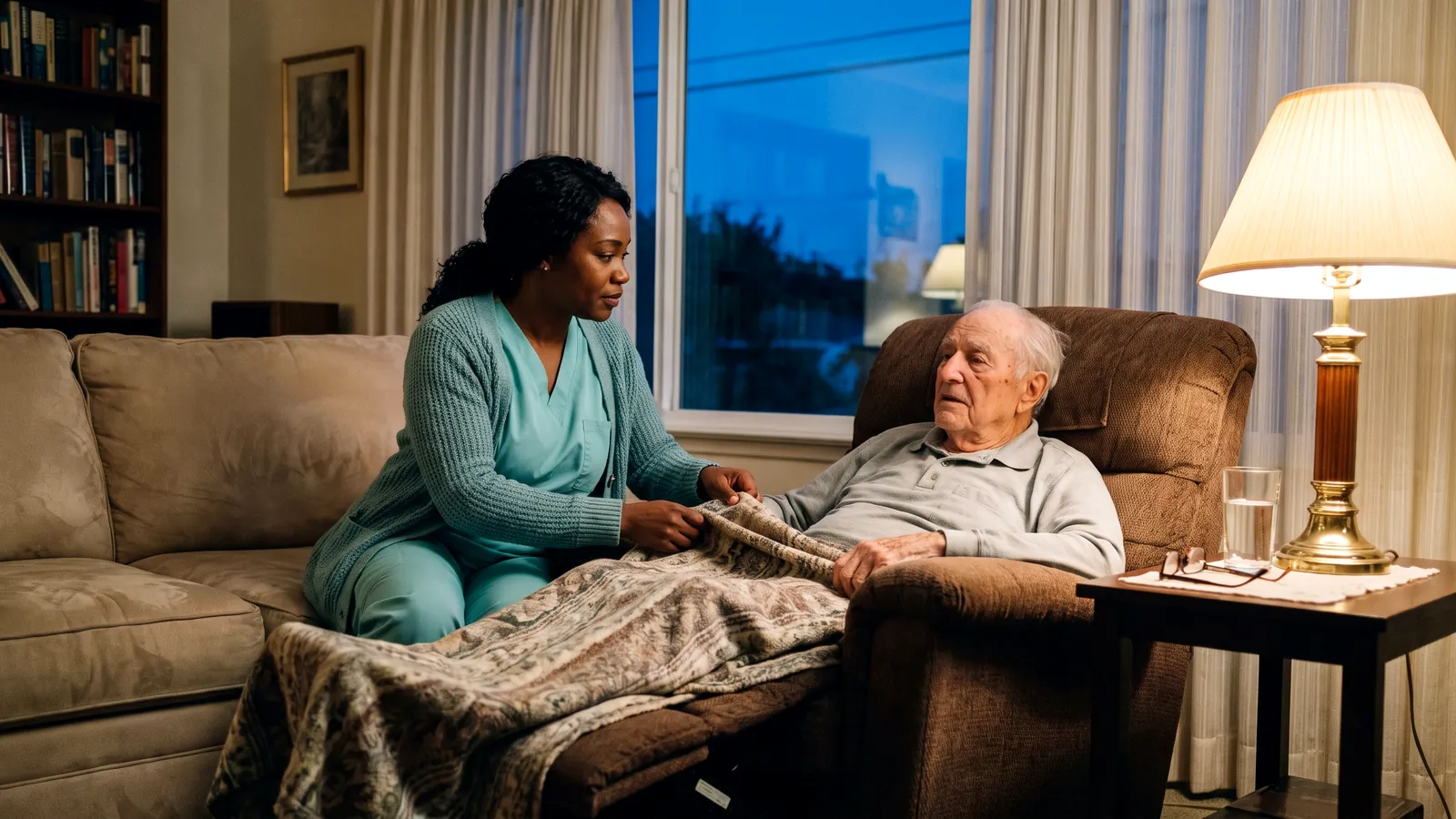
The hours after dark are where risk concentrates. Sundowning, the late-day confusion common with dementia, can turn a calm afternoon into an anxious evening. Bathroom trips in the dark are a classic setup for falls. An awake overnight caregiver handles toileting, repositioning, reassurance and fall prevention, so the household can sleep.
Many families begin with overnight care only and add daytime hours later, or the reverse. If your parent is living with Alzheimer's or another dementia, our dementia care team provides memory care at home, with caregivers trained for exactly these hours. Learn more on our memory care page.
What Are the Signs Your Parent Needs 24-Hour Care?
The clearest signs are falls, wandering, nighttime confusion, missed or doubled medications, and a parent who can no longer be left alone safely. Another sign is quieter: the family member providing care is exhausted. If two or three of these sound familiar, it's worth a conversation now rather than after the next emergency.
Most families don't notice one dramatic moment. They notice small things piling up:
- New bruises with vague explanations. "I bumped into something" often means falls nobody's being told about. The CDC notes that falling once doubles the chance of falling again.
- The house has changed. A room no longer used because of stairs, or furniture rearranged into a path to hold onto.
- Medications don't add up. Pills left in the organizer at the end of the week, or refills running out early.
- The refrigerator tells a story. Expired food, or the same single meal on repeat.
- Evenings are getting worse. Wandering, phone calls after midnight, or confusion that starts in the late afternoon.
- You're the one who's exhausted. If you're managing appointments, prescriptions and a phone that rings at 2 a.m., the need is already there.
You don't need a crisis to call. The families with the best outcomes bring in support while their parent still has a say in how it goes. With the right assistance, seniors with chronic conditions, adults with cognitive or developmental disabilities, and individuals recovering from surgery can all live well at home.
Can 24-Hour Care Start Right After a Hospital Discharge?
Yes. Call us as soon as you have a discharge date. We arrange same-day and next-day starts all the time, so your parent can come home to a caregiver already in place. The weeks right after a fall or hospital stay carry the highest risk of another fall, which is why many families choose round-the-clock help at first.
Hospital discharges move fast, and families often get a few hours' notice. When you call, tell us the discharge date, the reason for the stay and what the discharge planner said about mobility and medications. We'll set up a plan for the first days home, then adjust as your parent gets stronger. Often 24-hour care steps down to overnight or daytime help within a few weeks.
One thing to know: the home health nurse or therapist the hospital arranges usually visits a few times a week. They don't stay. Our non-medical caregivers fill the hours in between, and we work closely with any home health care services the doctor orders so everyone is on the same page. See our disability and recovery care page for more on recovery at home.
What Does a 24-Hour Caregiver Do Day and Night?
A 24-hour home caregiver handles everything your loved one needs to get through the day and night safely: bathing, dressing and toileting, meals and hydration, medication reminders, morning and bedtime routines, help moving around, supervision for wandering, and company. Overnight, they help with bathroom trips, repositioning and reassurance, and they keep written notes for the family.
During the day, that looks a lot like personal care plus companionship: help with bathing, a proper breakfast, light housekeeping, a short walk, a game of cards, a nap at the right time. See our personal care page for the full list. In the evening, the caregiver keeps the routine calm and steady, which matters even more with dementia.
After dark, the job is safety and calm. An awake caregiver hears your parent stir, gets them to the bathroom and back to bed, and settles them when they're confused. Our care is non-medical, so caregivers don't give injections or do wound care, but they do notice when something is off and call you and the doctor right away.
How Fast Can 24-Hour Home Care Start in Torrance?
Most families go from first call to a caregiver in the home within a week, and same-day or next-day after a hospital discharge. Speed comes from preparation: our caregivers are already state-registered and background-checked, they work across Torrance, Redondo Beach and the South Bay, and we introduce them before they begin services.
Even when things move fast, we don't skip the steps that keep your parent safe. You still get a written plan, and your parent still meets the caregivers before they start. Every caregiver is a state-registered home care aide with at least two years of verified experience, fingerprinted and background-checked through the DOJ and FBI, and supported with continuous training and supervision. You can check any California agency's license on the CDSS care facility search. Ours is HCO License #194700757.
What Happens on the First Call or Consultation?
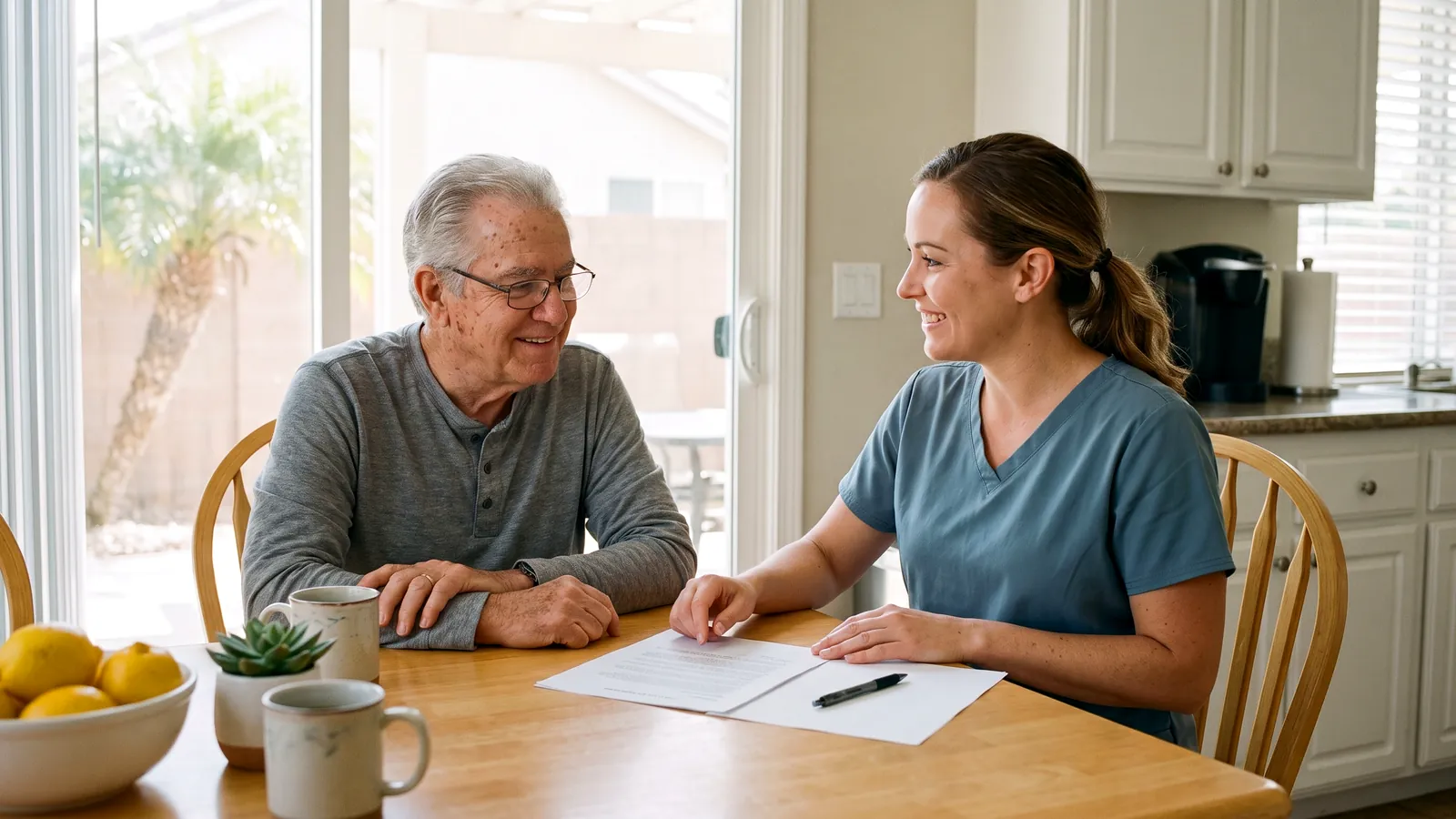
The first call is a conversation, not a sales script. You tell us what's been happening, in your own words, and we ask about nights, mobility, memory and routines. Then we meet with you in person, or over Zoom if you prefer, and come to the home for a free assessment before writing a personalized care plan you approve.
Here's how it usually goes:
- You call or send the contact form. A real person answers, any hour. If you're calling from a hospital hallway, that's fine.
- We talk it through. We'll tell you honestly whether shift care, live-in care or overnight help fits best.
- We visit the home, free. We look at safety, medications, mobility and routine, and meet your parent.
- You approve a written plan. Nothing starts until you've read it, and there's no long-term contract.
- We match and introduce caregivers. Matched on skill and temperament, so your parent is never met by a stranger.
If your parent resists the idea of "a stranger in the house," start small. Many families begin with overnight care only, let the parent choose which tasks the caregiver helps with, and grow from there once the caregiver is known and liked.
How Do You Choose a 24 Hour Home Care Agency in the South Bay?
Choose a licensed agency that schedules both awake shift care and live-in care, registers its caregivers with the state, runs background checks and covers sick days with trained backups. Ask how it matches caregivers, how it handles overnight emergencies, and who you'll reach when you call. Compare home care agencies on those answers first.
Not all home care services are built for around-the-clock coverage. Some agencies only staff daytime visits, and some offer only live-in care even when a senior needs someone awake. Good questions to ask any in home care provider:
- Are you a licensed Home Care Organization, and are caregivers employees rather than contractors?
- Can you provide both live-in care and awake rotating care, and switch between them if needs change?
- How do you match caregivers to a patient's personality, health and routine?
- Who covers a shift if a caregiver is sick, and how fast?
- Do you work with home health care nurses and therapists when a doctor orders them?
The right answers protect your parent's health, safety and dignity. They also protect the benefits of staying home: familiar rooms, familiar people and the lives seniors have built in their own neighborhoods. In the end you're choosing people, and you want compassionate, well-trained ones who show up on time and treat your parent like family.
Frequently Asked Questions
Can we start with overnight care only?
Yes. Many families begin with an overnight caregiver and add daytime hours later, or start with days and add nights. The plan can change as your parent's needs do.
Do overnight caregivers sleep?
In awake shift care, no. The caregiver stays awake and alert until morning. A live-in caregiver does sleep in the home and gets breaks, so live-in suits parents who usually sleep well.
Do you offer live-in care?
Yes. We schedule live-in care when it fits your loved one's needs, and awake rotating care when overnight hours need active attention. We'll recommend the safer option after the free assessment.
How many caregivers will we meet?
Typically two or three on a stable rotation, all introduced before they start, so your loved one is never met by a stranger. That consistency matters, especially with dementia.
Is 24-hour home care medical care?
No. Our caregivers provide non-medical help with daily living, safety and company. If your parent also needs nursing or therapy, we work alongside the home health team their doctor orders.
What does 24-hour home care cost?
It depends on the care model, the schedule and your loved one's needs. We'll give you a free, written quote after the assessment. For traditional market rates, see our guide to in-home care cost in Torrance and the South Bay.
Is a Family Caregiver Running on Empty?
Sometimes the person who needs help most is the one doing the caregiving. If you need a break before you need full-time care, our companion post on respite care in the South Bay explains how a few hours, a weekend or a week of coverage works. Our respite care service can start quickly when a family caregiver gets sick.
Tell Us What's Going On
You don't need the right words or a list of questions. Tell us what's been happening at home, and we'll tell you whether shift care, live-in care or overnight help fits your loved one, and what we'd do first. Fill out our contact form and we'll get back to you quickly, or call (310) 940-0191 any hour, day or night.
Around the Clock Home Services is a family-owned, non-medical home care agency (California HCO License #194700757) serving seniors and families in Torrance, Redondo Beach, Manhattan Beach, Hermosa Beach, the Palos Verdes Peninsula, El Segundo, Carson, Long Beach and the rest of Los Angeles County for 30+ years. Request a free care assessment.
Want to talk it through with someone who has seen this before?
Tell us what has been happening at home. The call is free, the in-home assessment is free, and there is nothing to sign to get answers.