Insights · Care options
Home Care vs. Home Health in the South Bay: What's the Difference, and What Does Medicare Pay For?
Home care is non-medical help with daily life, like bathing, meals, medication reminders and company, and most families pay for it privately. Home health is short-term skilled medical care, like nursing or physical therapy, that a doctor orders. Medicare covers home health for people who qualify. It doesn't cover ongoing home care.
October 2026 · 10 min read · Around The Clock Home Services
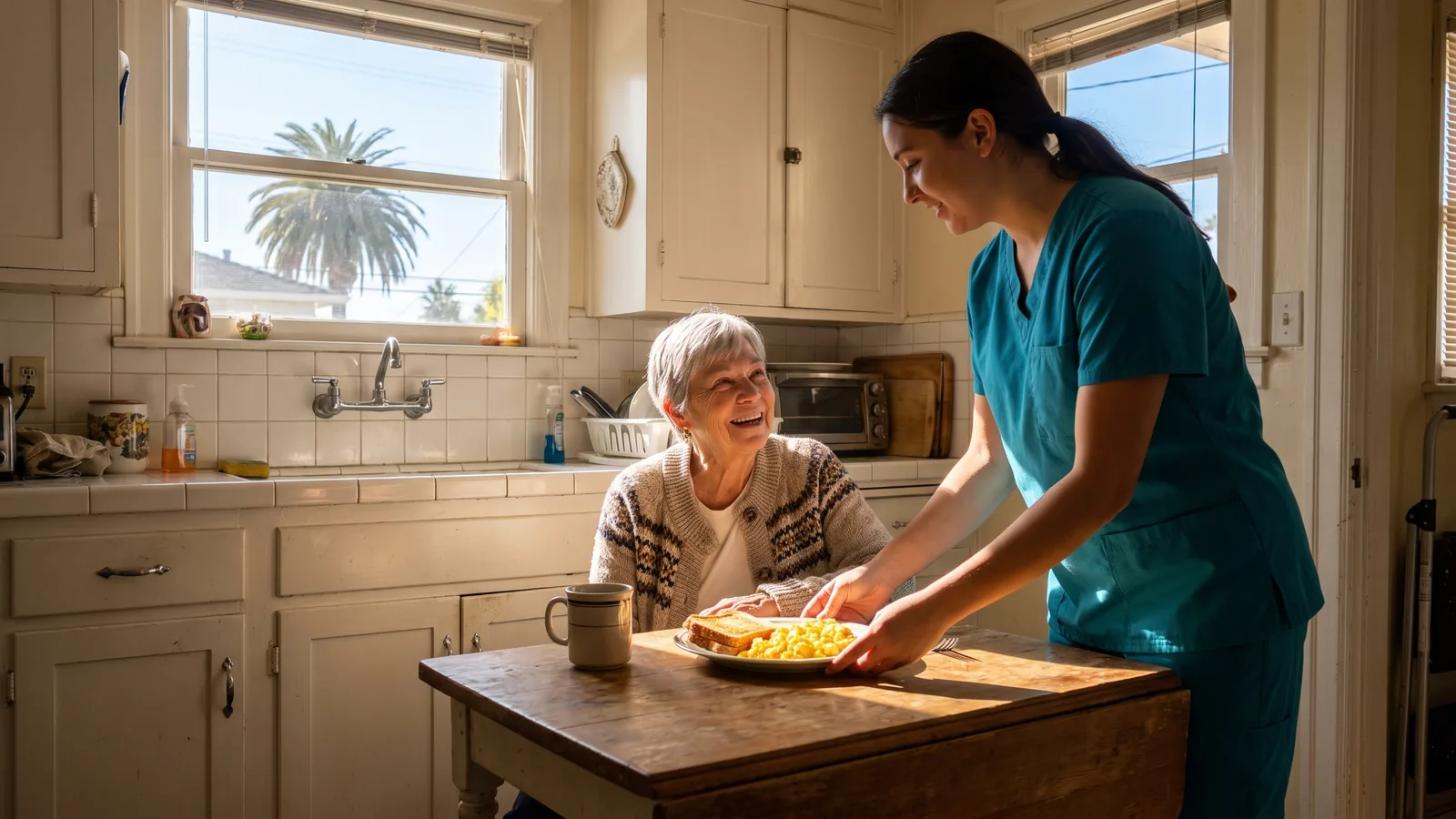
If you just heard both terms from a discharge planner and they sounded like the same thing, you're not alone. Most families we talk to in Torrance, Redondo Beach and the rest of the South Bay mix them up, and it matters, because one is usually covered by Medicare and the other usually isn't. This guide explains home care vs home health in plain language: what each one does, who covers it, what California programs like Medi-Cal and IHSS offer, and how many families use both at the same time.
We're Around the Clock Home Services, a family-owned home care agency for seniors and adults with disabilities (California HCO License #194700757). Our home care services are non-medical. We are not a home health agency, and we'll be clear about where our work ends and a nurse's begins.
If you already know your mom or dad needs help at home, tell us what's going on or call (310) 940-0191. A person answers 24 hours a day.
What's the difference between home care and home health?
Home care is everyday support from a trained caregiver: personal care, meal preparation, light housekeeping, companionship and supervision, from a few hours a week up to 24 hour care. Home health is skilled care from licensed clinicians, like a registered nurse or physical therapist, ordered by a doctor and usually short-term.
The easiest way to keep them straight is to ask who's doing the work. With home health, it's a nurse, a therapist or a home health aide working under a clinical plan. With home care, it's a caregiver helping with the activities of daily living that have gotten hard for seniors to manage alone. Think of it as senior care that keeps the family's routine running, and as non-medical support that can grow when needs do.
Who provides it
Home care (non-medical)Registered home care aides from a licensed home care organization
Home health (skilled)Nurses, therapists and home health aides from a Medicare-certified agency
What it covers
Home care (non-medical)Bathing, dressing, meals, housekeeping, reminders, company, supervision
Home health (skilled)Wound care, injections, IV therapy, physical, occupational and speech therapy
Who orders it
Home care (non-medical)You and your family
Home health (skilled)A doctor or other health care provider
Visit length
Home care (non-medical)A few hours up to 24 hour or live-in care
Home health (skilled)Short nursing visits, often an hour or less
How long it lasts
Home care (non-medical)As long as you need it
Home health (skilled)Until the skilled goals are met
Who usually covers it
Home care (non-medical)Private funds, long-term care insurance, VA, or IHSS for people who qualify
Home health (skilled)Medicare, Medi-Cal or private insurance when you qualify
| Home care (non-medical) | Home health (skilled) | |
|---|---|---|
| Who provides it | Registered home care aides from a licensed home care organization | Nurses, therapists and home health aides from a Medicare-certified agency |
| What it covers | Bathing, dressing, meals, housekeeping, reminders, company, supervision | Wound care, injections, IV therapy, physical, occupational and speech therapy |
| Who orders it | You and your family | A doctor or other health care provider |
| Visit length | A few hours up to 24 hour or live-in care | Short nursing visits, often an hour or less |
| How long it lasts | As long as you need it | Until the skilled goals are met |
| Who usually covers it | Private funds, long-term care insurance, VA, or IHSS for people who qualify | Medicare, Medi-Cal or private insurance when you qualify |
In California, the two are licensed by different state departments. Home care organizations like ours are licensed by the California Department of Social Services, and every caregiver has to be listed on the state's Home Care Aide Registry before working with a client. Home health agencies are licensed by the California Department of Public Health and certified by Medicare.
What do home health care services include?
Home health care services include part-time skilled nursing care, physical therapy, occupational therapy, speech therapy, medical social services and, while skilled care is happening, some home health aide services. A doctor has to order them, and a Medicare-certified agency provides them. Visits are short and end when your parent has recovered.
Medicare.gov lists the kinds of skilled nursing a home health nurse may provide, like wound care for a surgical wound, injections, IV or nutrition therapy, and monitoring a serious illness. Home health care services can also include medical supplies and durable medical equipment, and the agency keeps the doctor updated on the care plans.
A home health aide is part of that skilled team. Under Medicare, home health aide services are only covered when your parent is also getting skilled nursing or therapy at the same time. The aide might help with bathing, walking or changing bed linens during a visit, then leave. That's the piece families don't expect: home health comes and goes. Nobody stays.
What does non-medical home care include?
In-home care includes help with bathing, dressing and toileting, meals, laundry, medication reminders, safe walking and transfers, companionship, and supervision for someone who shouldn't be alone. It can be a few hours a week, overnight, 24 hour shift care or a live-in caregiver, for as long as the family needs that assistance.
Here's what in home support from our caregivers looks like on a normal day for a South Bay family:
- Personal care like a safe shower, getting dressed, grooming and toileting, done with patience and privacy
- Meal preparation that follows the doctor's diet instructions, and making sure Mom actually eats and drinks
- Reminders so pills aren't missed or doubled
- Light housekeeping and laundry, so the home stays safe to move through
- Companion care and conversation, which matters more than most families expect
- Respite care so family caregivers can rest, work or see their own doctor
- Overnight, 24 hour and live-in care for seniors who need continuous support
What we don't do matters just as much. Our caregivers don't change wound dressings, give injections or do any other nursing task. Those belong to the home health team. Our personal care and 24-hour home care pages list everything included. Home care also travels: if your parent lives in an independent living community, a caregiver can come there too, and many seniors simply prefer the familiar surroundings of the house they've lived in for decades.
What does Medicare actually cover at home?
Original Medicare covers home health services when your parent is homebound, needs part-time or intermittent skilled nursing or therapy, and a doctor orders it from a Medicare-certified agency. You pay nothing for covered home health visits. Medicare does not cover 24 hour care at home, homemaker services, or personal care when that's the only help someone needs.
This is the part families most often get wrong, so here it is straight from Medicare.gov. The home health benefit falls under Medicare Part A (hospital insurance) and Part B (medical insurance). To qualify, your parent generally has to be:
- Under a doctor's care, with a plan of care the provider reviews
- In need of part-time or intermittent skilled care, like nursing or therapy
- Homebound, meaning leaving home takes a lot of effort or isn't recommended
- Seen in person by a doctor or other provider who confirms the need
If those boxes are checked, Medicare coverage for home health is generous, and the visits cost you nothing. What Medicare includes beyond the visits is limited. Durable medical equipment like a walker or hospital bed works differently. After the Part B deductible, you owe 20% of the Medicare-approved amount.
The same page lists what Medicare won't cover: 24-hour-a-day care at home, home meal delivery, homemaker services like shopping and cleaning that aren't part of the care plan, and custodial or personal care when that's the only care you need. Medicare's long-term care page is just as blunt, and it says most health insurance, including Medigap, won't cover it either. In short, Medicare does not cover the kind of daily assistance most aging parents need for years, not weeks. Medicare is run by the Centers for Medicare & Medicaid Services, part of the U.S. Department of Health and Human Services, and Original Medicare's rules are national, so living in California doesn't change them.
How many hours a day will Medicare cover home health care?
In most cases, Medicare covers skilled nursing and home health aide services up to 8 hours a day combined, with a maximum of 28 hours a week. For a short time, a provider can order more frequent care, up to 35 hours a week. Most families see far fewer hours, often a few short visits a week.
Those numbers come from Medicare.gov's home health page, and they're a ceiling, not a promise. In real life, a nurse may come twice a week for an hour, and a therapist two or three times. If your parent needs someone there most of the day or all night, that's home care, and families usually cover it themselves. Medicare won't fund a caregiver who stays, and it doesn't compensate family members for caregiving either.
Does Medicare cover hospice care at home?
Yes. Medicare Part A covers hospice care, usually at home, for people with a terminal illness and a life expectancy of six months or less who choose comfort care. The hospice benefit covers the hospice team's visits, pain management, symptom management, medical equipment and supplies, and some hospice aide and homemaker services.
Home hospice care is one of the best benefits Medicare offers to seniors and their families, and it's one more reason the terms get confusing. According to Medicare's hospice care page and its hospice benefits booklet, a hospice nurse and doctor are on call 24 hours a day, 7 days a week, and the hospice team can include nurses, social workers, aides and counselors. The hospice provider can also arrange short inpatient respite stays of up to five days at a time. Hospice benefits don't include room and board.
What hospice services usually don't include is a caregiver at the bedside all day and all night. Hospice care services are built around visits. The hospice team visits, and the family fills the hours in between, which can be extremely difficult for one person. That's often where home care comes in alongside home hospice care. We work with hospice teams, so the family gets quality time with their loved one instead of covering every shift alone.
Not sure which kind of care your parent needs? That's exactly what the first call is for. Call (310) 940-0191 any hour, or send us a note. The assessment is free, in person or on Zoom.
Does Medi-Cal or IHSS cover home care in California?
Sometimes. California's In-Home Supportive Services program, IHSS, can cover some in-home help for people who are 65 or older, blind or disabled and eligible for Medi-Cal. A county social worker decides how many hours you get. You then hire your own caregiver, who is often a family member.
The California Department of Social Services describes IHSS as an alternative to out-of-home care that helps people stay safely in their own homes. In Los Angeles County, the Department of Public Social Services runs it. Services that can be authorized include housecleaning, meal preparation, laundry, grocery shopping, personal care and protective supervision for people with a cognitive impairment.
A few things to know before you apply:
- You need a Medi-Cal eligibility determination and a Health Care Certification form signed by a licensed health care professional.
- A county social worker visits the home and decides which services you need and how many hours per month to authorize.
- You become the employer. IHSS recipients hire, train and supervise their own provider, and the state issues the paychecks. Some people owe a share of cost.
- To apply in LA County, call (888) 944-4477. The process can be time consuming, so start early.
Medi-Cal also covers medically necessary home health care. If IHSS covers part of the week, some families add private home care for the hours it doesn't reach, like nights or weekends. Rules change, so check with the county or a benefits counselor before counting on a program.
What about Medicare Advantage plans, long-term care insurance and the VA?
Medicare Advantage plans have to cover home health like Original Medicare does, and some include limited extra in-home support. Long-term care insurance often covers non-medical home care after an elimination period. VA benefits like Aid and Attendance can help eligible veterans and surviving spouses. Check each policy's exact terms.
If your parent has a Medicare Advantage plan, call the number on the card and ask what it requires for home health and whether it includes any in-home support or respite hours. Those extras, when they exist, tend to be small. Long-term care insurance is the policy most likely to help with ongoing care, so read its insurance coverage terms closely, and call us with the policy in hand if you'd like help. For free Medicare counseling in California, the state's HICAP program is at 1-800-434-0222, and the Medicare helpline is 1-800-MEDICARE (1-800-633-4227).
Home health aide vs. caregiver: what can each one do?
A home health aide works for a home health agency under a nurse's plan, usually during short visits while skilled care is happening. A home care aide, or caregiver, works for a home care agency and can stay for hours, overnight or live in. Neither one can practice nursing, change dressings, give injections or adjust medications.
People ask us which is better, an HHA or a caregiver. It's not really a contest. The home health aide helps your mom bathe on the days the nurse visits. The caregiver is the person there at 7 p.m. when she's tired and a little confused, and at 3 a.m. when she needs the bathroom.
Private caregivers you hire on your own can cost less per hour. The tradeoff is that you become the employer, with payroll, taxes, background checks and backup when someone calls in sick. A licensed agency handles all of that, and in California, agency caregivers have to be registered and background-checked.
Can you use home care and home health at the same time?
Yes, and many families do, especially after a hospital stay. The home health nurse and therapist visit a few times a week for the skilled part of recovery. A caregiver covers the hours in between: meals, a safe shower, help getting up and walking, reminders and company.
Here's a typical South Bay family example. Your dad comes home from the hospital after a fall. Medicare covers a nurse twice a week and physical therapy three times a week, maybe five hours of skilled care in all. The other 163 hours, someone still has to make sure he eats, takes his pills on time and doesn't try the stairs alone at night.
That's the gap we fill. We coordinate with the home health team so everyone works from the same plan, and we can often start the same day or the next day after a discharge. Our 24-hour home care guide explains how round-the-clock care works right after a hospital stay, and our disability and recovery care page covers recovery support at home.
How do you choose the right home care agency in the South Bay?
Choose a licensed California Home Care Organization whose caregivers are registered, background-checked employees. Ask how they match caregivers, who covers sick days, whether they offer live-in and 24 hour care, and whether a real person answers at night. The right home care agency will also tell you plainly when you need home health instead.
Good questions for any home care agencies you're comparing, whether you're in Torrance or Palos Verdes:
- What's your HCO license number, and are your caregivers employees?
- How fast can services begin after the first call?
- Will we meet the caregivers first, and will it be the same small team?
- Can you work alongside our home health nurse or hospice team?
You should get professional guidance, not a sales pitch. Our first conversation can happen on the phone, in person or over Zoom. Then we do a free assessment, write a care plan you approve, and care begins on your schedule, often the same day or the next.
Frequently asked questions
Will Medicare pay for a caregiver in my home?
Not for ongoing daily care. Medicare covers part-time home health aide services only when your loved one also needs skilled nursing or therapy and is homebound. It doesn't pay for a caregiver to stay for hours, overnight or around the clock.
How long does Medicare cover home health care?
There's no fixed limit on visits as long as your loved one keeps qualifying. Home health continues while a doctor certifies the need for part-time skilled care and your parent remains homebound. When the skilled goals are met, it ends, even if daily help is still needed.
What disqualifies you from home health care?
Your parent won't qualify for Medicare home health if they aren't homebound, if they only need custodial or personal care, or if they need more than part-time or intermittent skilled care. A doctor also has to see them in person and order it.
What are the downsides of in-home care?
Cost is the big one. Many hours of private care add up, and Medicare won't help with it. Finding the right fit can also take a family a few tries. Some homes need safety changes, and a parent may resist help at first. A steady, well-matched caregiver usually solves most of the rest.
Is home care cheaper than a nursing home?
For part-time help, usually yes. CareScout's 2025 Cost of Care Survey puts the California median for a semi-private nursing home room at about $12,167 a month. Round-the-clock home care can cost more than that, so it depends on the hours.
How much does home care cost in the South Bay?
Traditionally, a non-medical caregiver in California has cost about $40 an hour, the state median in CareScout's 2025 survey. We typically quote lower than traditional market rates, and you'll get a free written quote after the assessment. See our in-home care cost guide.
Not Sure Which One You Need? Ask Us.
You don't have to sort out Medicare rules before you call. Care plans can start small and change. Tell us what's happening at home, and we'll tell you honestly whether it sounds like home health, home care or both, and what we'd do first. Fill out our contact form, or call (310) 940-0191 any hour, day or night. A real person answers.
Around the Clock Home Services is a family-owned, non-medical home care agency (California HCO License #194700757) serving seniors and families in Torrance, Redondo Beach, Manhattan Beach, Hermosa Beach, the Palos Verdes Peninsula, El Segundo, Carson, Long Beach and the rest of Los Angeles County for 30+ years. Request a free care assessment.
Want to talk it through with someone who has seen this before?
Tell us what has been happening at home. The call is free, the in-home assessment is free, and there is nothing to sign to get answers.