Insights · Family caregiving
Caring for Elderly Parents When One Needs Care and the Other Is Worn Out
When you're caring for elderly parents and one needs daily help while the other is exhausted from providing it, you have four realistic options: one caregiver who supports both parents, more hours of in-home care, regular respite for the healthier parent, or a clear split of duties among family members. Most families end up combining two of them. The right mix depends on how much hands-on care the frailer parent needs, how much the other parent can safely keep doing, and what resources your family has in your local area.
October 2026 · 13 min read · Around The Clock Home Services
Here's a situation we hear about a lot. Dad had a stroke last year, or his Parkinson's has gotten worse, and Mom has been doing everything. She helps him to the bathroom at night, cooks, drives to every doctor's appointment, and tells you on the phone that she's fine. Then you visit their house in Torrance and notice she's lost weight, the bills are stacked on the counter, and she nods off sitting up at 4 p.m.
You're not really caring for one parent. You're caring for two aging parents, and one of them is the caregiver. If you feel overwhelmed, that's a normal reaction to a major change in your family.
This guide compares the options honestly: what each one actually looks like, what it costs in time and money, and when senior living options or a facility really are the safer choice. It's practical advice for adult children and family caregivers making a hard decision about a loved one, or two. We're Around the Clock Home Services, a non-medical home care agency in Redondo Beach, so we do provide in-home care. We'll still tell you where it falls short.
Why is caring for two aging parents at once so hard?
Because the healthier parent is usually doing more than anyone realizes, and their own health is quietly paying for it. And needs only grow: according to the Administration for Community Living, most people who reach 65 today will need some kind of long-term care at some point: nearly 70% of them. Spouses tend to downplay how tired they are, partly out of love and partly out of pride. Adult children see one parent who needs care, when the real picture is two elderly parents who both need support. Caregiving for a spouse is physical, emotional and around the clock, and family caregivers in that spot rarely ask for help.
Older adults who do the caregiving for a spouse carry a real risk to their own health. In a well-known study published in JAMA, older adults caring for a disabled spouse who reported mental or emotional strain had a 63% higher risk of death over four years than people who weren't caregiving. Spousal caregivers who helped without strain didn't show that higher risk. The strain is the problem, which is good news, because strain is something you can reduce.
Signs the healthier parent is running on empty:
- They're losing weight, skipping their own checkups or letting chronic health conditions slide.
- They're up several times a night and never really sleep.
- They've stopped seeing friends, going to church or doing favorite activities.
- They snap more, cry more, or say things like "I can't do this much longer."
- They've hurt their back or had a fall while helping with a transfer.
- Small things are slipping: bills, groceries, their own medications.
If you see two or three of these, the question isn't whether to bring in help. It's which kind. Watch the frailer parent's cognitive health, too, since memory changes raise the level of supervision needed.
Option 1: One caregiver who supports both parents
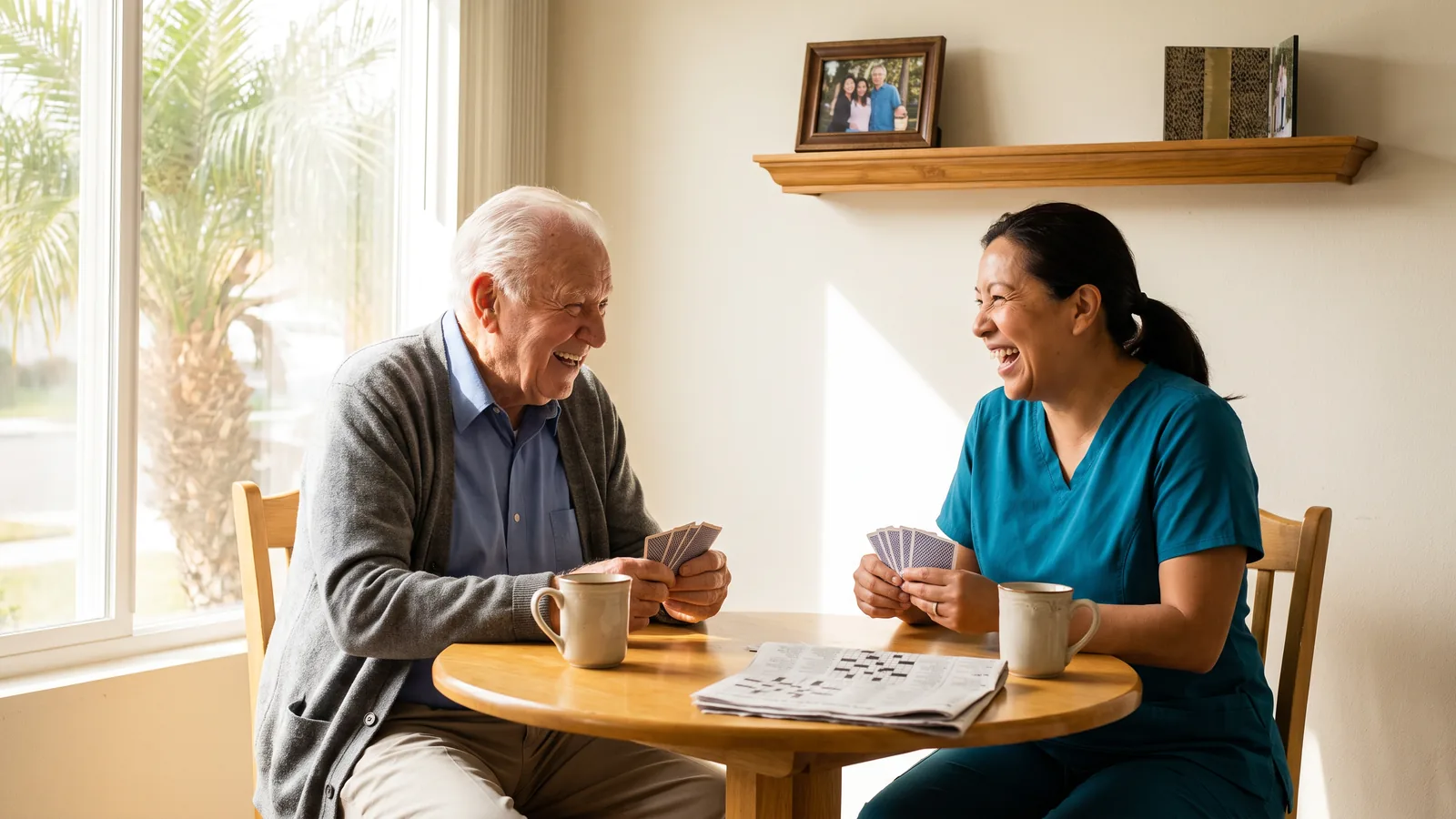
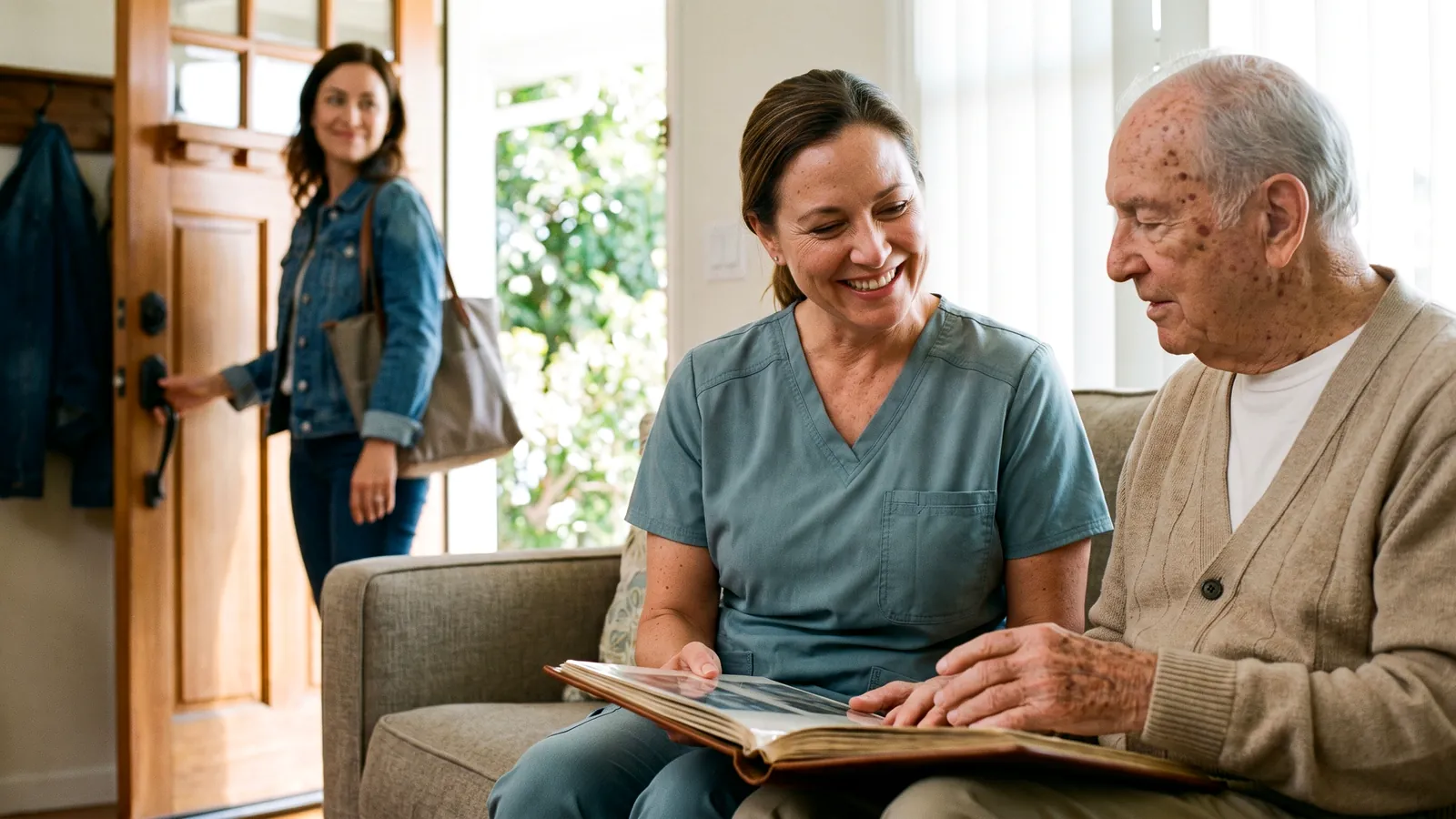
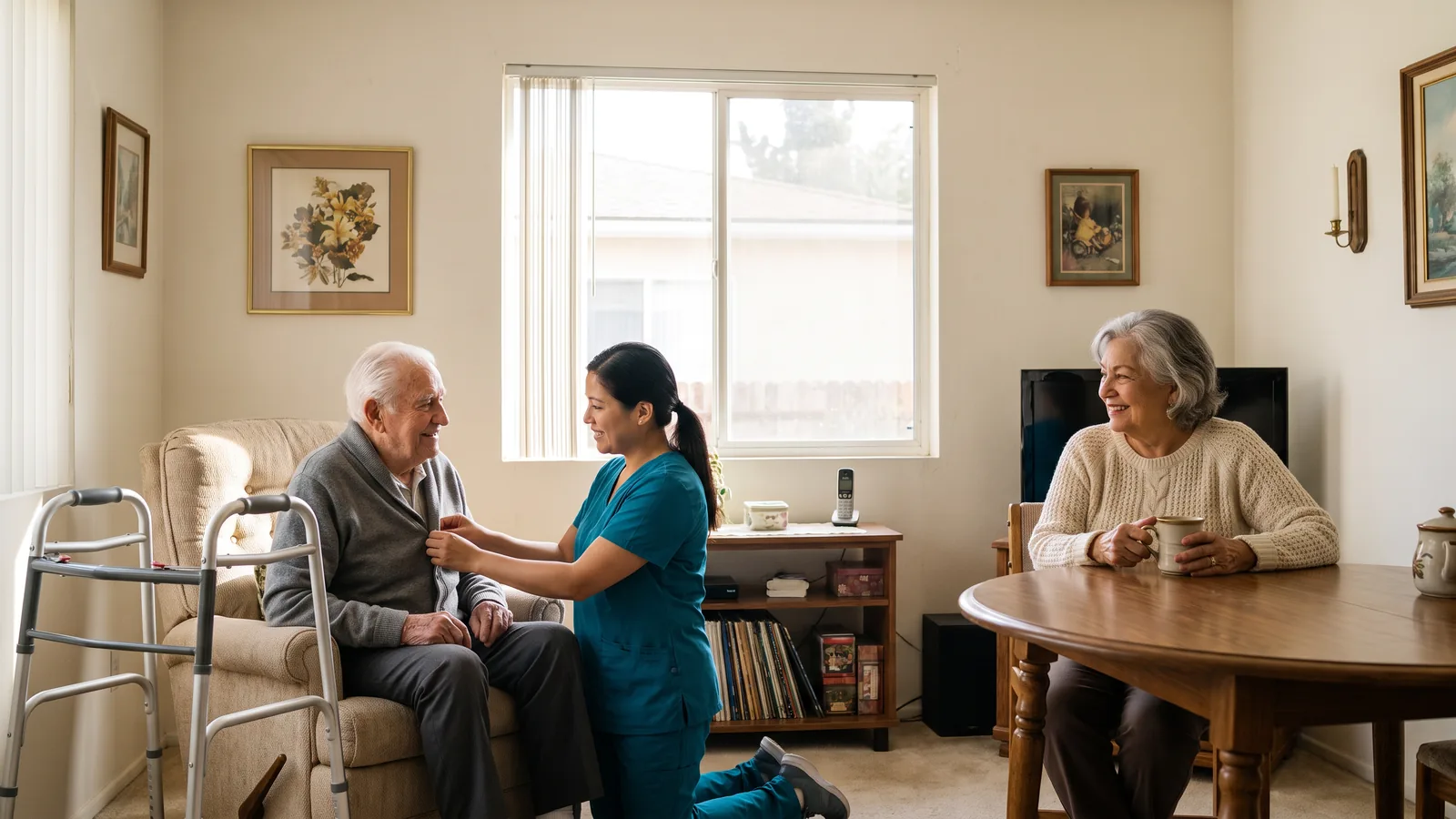
One caregiver can often help both parents during the same visit. They give hands-on personal care to the parent who needs it, like bathing, dressing and transfers, while also cooking for both, keeping the house running and giving the healthier parent real time off. For many couples, this is the most natural fit, because one person in the house provides personal care assistance, emotional support and help with the instrumental activities of daily living, like cooking, shopping and housework.
Mom often gains the most. Once someone else is giving Dad his shower and making lunch, she gets her day back in small pieces. She can lie down for an hour. She can walk to the coffee shop in Riviera Village, or keep her own doctor's appointment without lining up someone to sit with Dad.
Jocelyn Sharpe described this well in a review she left for us. Her family's caregiver was "like a breath of fresh air in my parents life, because of both his outstanding care of my dad and his sensitive kind, respectful treatment of my mother." That's the goal: care for the parent who needs it, and kindness and relief for the one who's been holding it together.
What a caregiver can do for the healthier parent:
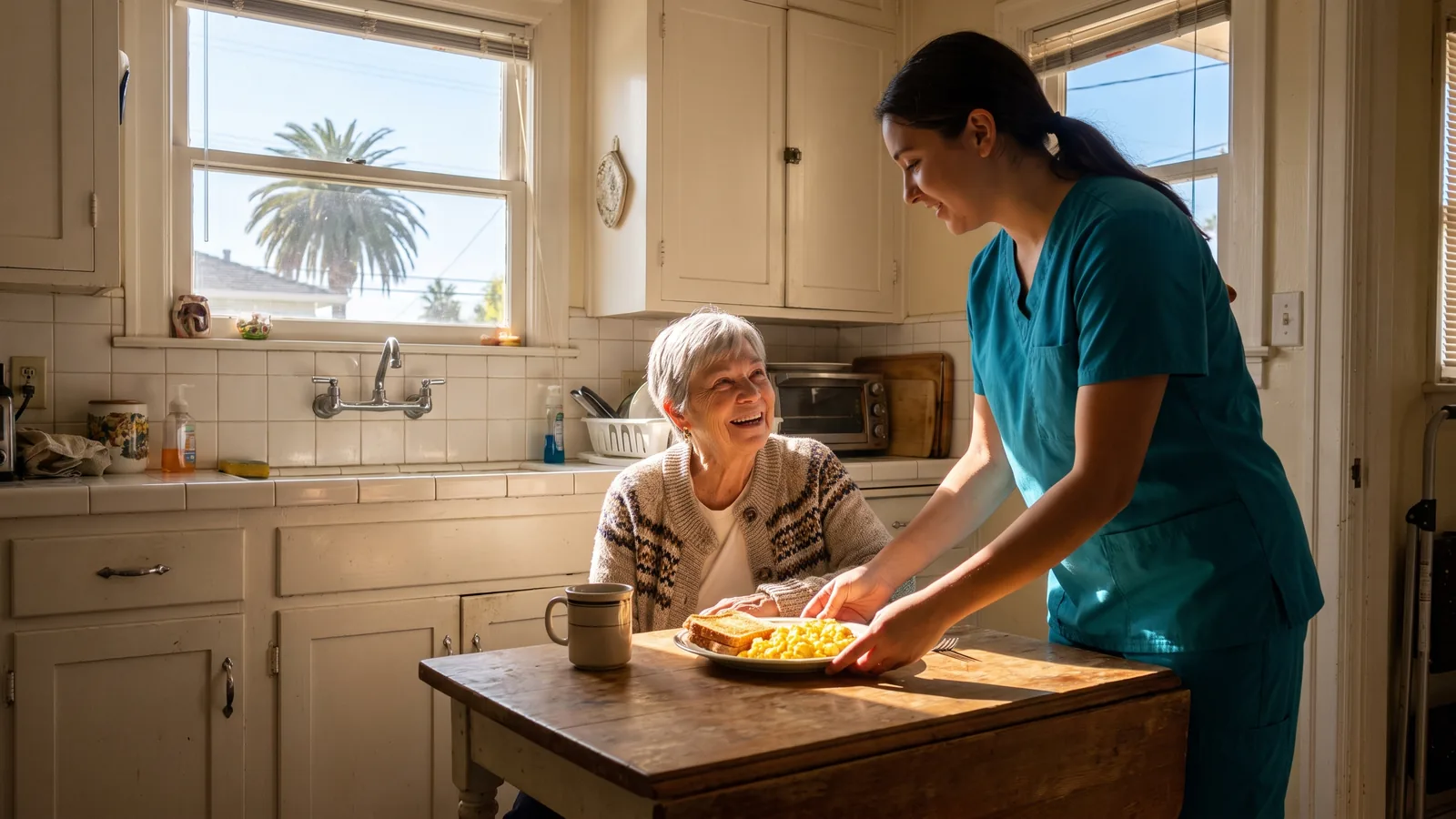
- Cook meals for both and clean up after.
- Handle light housekeeping, laundry and grocery shopping.
- Drive either parent to appointments.
- Give medication reminders to either parent.
- Offer company, conversation and emotional support, so the healthier spouse isn't the only person Dad talks to all day.
- Spot safety issues and suggest fixes, like installing grab bars by the toilet, better lighting in the hallway, or a medical alert system for the times no one's there. Falls are a common risk for seniors at home, and these small changes help.
What to clear with the agency first:
- If both parents need hands-on personal care, say so at the assessment. Two people needing bathing and transfers is a heavier job, and it can change the schedule, the staffing or the rate.
- Ask how the agency plans and prices care for a couple, so there are no surprises later.
Remember that home care is non-medical. A caregiver can remind either parent to take their pills from a pill organizer, but medication management, wound care and injections belong to nurses or home health. Our home care vs. home health guide explains the difference.
Option 2: More hours of in-home care
If the frailer parent's needs with activities of daily living have grown, adding hours of in-home care may be the real fix. That might mean moving from three mornings a week to daily visits, adding an evening shift for dinner and bedtime, or bringing in overnight help so the healthier parent can finally sleep through the night.
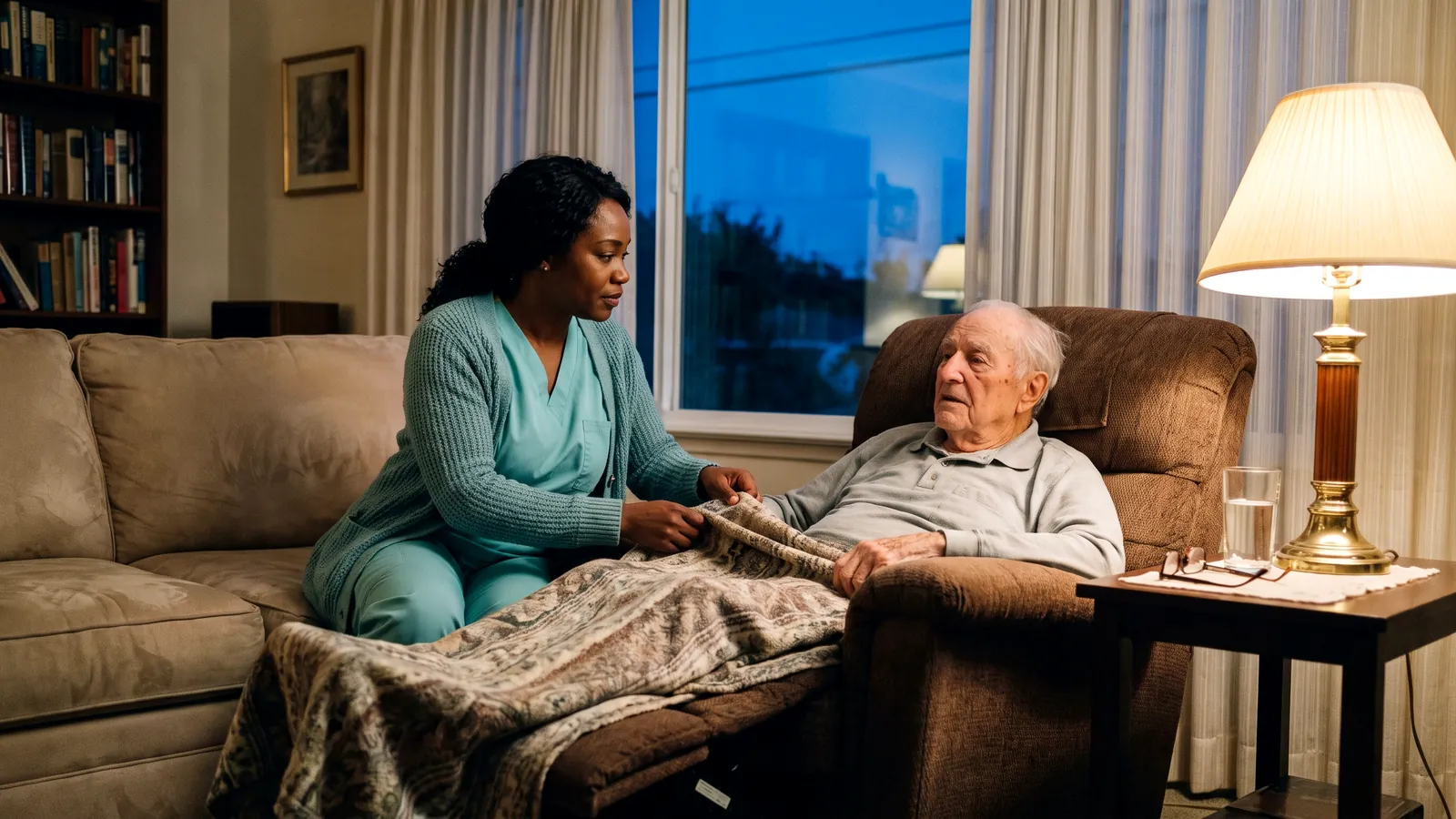
Nights are often the breaking point for family caregivers. A spouse who gets up three times a night to help with the bathroom can manage it for a few weeks, not a few years. An awake overnight caregiver can change everything for both parents. Our 24-hour home care guide explains how overnight, shift and live-in care work.
More hours do cost more, and that's the hard part. Most families pay for this care themselves, because Medicare won't cover ongoing non-medical help at home, so a few extra shifts a week show up fast on the bill. In California, a non-medical caregiver has run about $40 an hour, the state median in CareScout's 2025 Cost of Care Survey. Our in-home care cost guide walks through South Bay numbers.
A practical way to start: add hours where the healthier parent is struggling most. That's usually mornings (showers, dressing) or nights (toileting, wandering), not the middle of the afternoon.
Option 3: In-home respite for the healthier parent
Respite care means a caregiver comes in so the family caregiver can step away for an afternoon, a weekend or longer. When the caregiver is a spouse, respite gives them protected time for their own health, rest and life, while the parent who needs care stays safely at home.
Respite works well when the healthier parent can still handle most of the day but needs regular breaks to keep going. A standing Tuesday and Friday afternoon, every week, tends to work better than waiting until Mom collapses and then scrambling.
It also helps to name what the time is for. Ask your mom to use respite hours for her own life: her mammogram, her bridge group in Hermosa, lunch with a friend, a nap with the phone off. Self-care isn't selfish when you're the person a whole household depends on. It protects her well-being, and it makes a huge difference in how long she can keep providing care. The Family Caregiver Alliance has a good guide to caregiver self-care worth sharing with her.
Our respite care guide goes deeper on how respite works and what it costs. To find community resources like adult day programs and caregiver support groups, the federal Eldercare Locator connects you to your local Area Agency on Aging.
Option 4: Splitting duties with other family members
When you're caring for elderly parents with brothers and sisters, dividing the work can go a long way, as long as the tasks are ones that can be done on your own schedule. Maybe your sister takes over the bills and the insurance calls. Your brother does the Sunday grocery run and drives to doctor visits. You take one weekend a month so Mom can rest.
Where it breaks down is daily, hands-on care. Siblings have jobs, kids and their own health. Someone living in Long Beach can't easily get to Palos Verdes every morning to help Dad shower. And the sibling who lives closest usually ends up doing most of it, which builds resentment fast.
Here's what tends to make a family plan actually hold up:
- Sit down together once, with your parents if they can join. Write every job on paper, from Dad's showers to filing the taxes.
- Give each person a specific job. "I've got Thursday rides" helps far more than "call me if you need anything."
- Let distance shape the role. A brother in another state can't help with a transfer, but he can manage the bills, research resources, look into financial assistance programs or pay for a few hours of care.
- Put the medical details in one shared spot. One document with medications, doctors and insurance saves a lot of scrambling in an emergency.
- Keep your parents in the decision-making. Follow their wishes wherever it's safe.
- Decide the next step before you need it. Agree now on what happens if Dad falls or Mom gets sick. Write an emergency plan with each parent's medical conditions, medications, doctors and emergency contacts, and tape it inside a kitchen cabinet.
In practice, most families mix the two. Brothers and sisters take the rides and paperwork, and a paid caregiver covers bathing and the hours nobody in the family can be there.
How do the options compare?
Best when
One caregiver for bothOne parent needs hands-on care, the other needs relief
More hoursCare needs have grown, or nights are hard
Respite for the healthier parentHealthier parent can do most of it with breaks
Splitting duties with familyFamily lives close and tasks can be scheduled
Helps the healthier parent
One caregiver for bothDirectly, every visit
More hoursA lot, especially overnight
Respite for the healthier parentYes, with protected time off
Splitting duties with familySome, if the split is fair
Hands-on personal care
One caregiver for bothYes
More hoursYes
Respite for the healthier parentYes, during respite hours
Splitting duties with familyOnly if family is trained and able
Cost
One caregiver for bothPaid hours
More hoursHighest
Respite for the healthier parentModerate
Splitting duties with familyLow in dollars, high in time
Main risk
One caregiver for bothPlan for the case where both need hands-on care
More hoursCost adds up
Respite for the healthier parentBreaks too short or too rare
Splitting duties with familyBurnout of the closest sibling
| One caregiver for both | More hours | Respite for the healthier parent | Splitting duties with family | |
|---|---|---|---|---|
| Best when | One parent needs hands-on care, the other needs relief | Care needs have grown, or nights are hard | Healthier parent can do most of it with breaks | Family lives close and tasks can be scheduled |
| Helps the healthier parent | Directly, every visit | A lot, especially overnight | Yes, with protected time off | Some, if the split is fair |
| Hands-on personal care | Yes | Yes | Yes, during respite hours | Only if family is trained and able |
| Cost | Paid hours | Highest | Moderate | Low in dollars, high in time |
| Main risk | Plan for the case where both need hands-on care | Cost adds up | Breaks too short or too rare | Burnout of the closest sibling |
What if your aging parents resist outside help?
Resistance is common among seniors, and it usually comes from pride, worry about cost, or not wanting a stranger in their own home. Most aging parents want to live independently as long as possible, and that's worth respecting. Framing helps. Present the caregiver as help for the healthier parent ("someone to take some of this off Mom") rather than care for the frailer one, and start with a few hours of household help before anything personal.
Meeting the caregiver ahead of time helps a lot. At our agency, each client has a small team of 2 to 3 regular caregivers, plus a backup you meet first, so your parents aren't opening the door to a stranger every week.
Want to talk through your parents' situation? We offer a free assessment at their home or over Zoom, which works well if siblings are spread out. Call (310) 940-0191 or send us a note.
When is a facility the safer choice?
In-home care works for many couples, but not every situation. A facility, or skilled nursing, may be safer when the frailer parent needs medical care around the clock that home care can't provide, when two-person transfers are needed many times a day, or when the healthier parent's own health is failing and no one can cover the gaps.
Signs to take seriously:
- The frailer parent needs skilled nursing care, like frequent wound care or tube feeding, every day.
- Behaviors from advanced dementia put either parent at risk, and round-the-clock care at home isn't affordable.
- The healthier parent has had a serious health event and can't safely be a caregiver anymore.
- Repeated falls or hospital stays keep happening even with help at home.
Saying this out loud isn't failure. Sometimes the safest, kindest choice is a nursing home or other senior living for one parent, with the healthier parent visiting daily. Long-term care settings exist for good reasons. Your parents' doctor, a geriatric care manager and other resources like your local Area Agency on Aging can help you weigh senior living options against care at home. Talk it through as a family before a crisis forces the decision.
What does in-home care for both of your elderly parents look like with us?
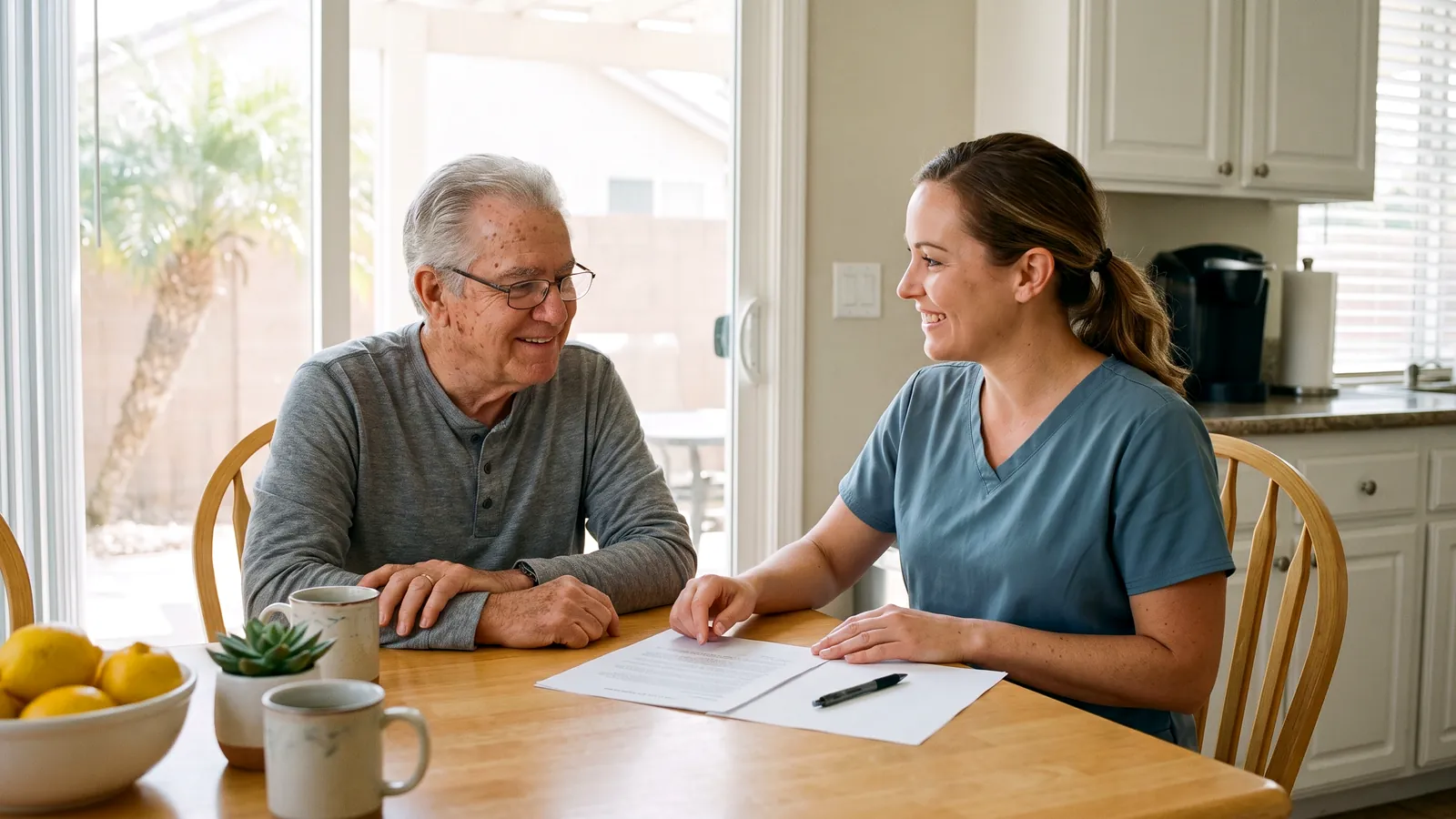
It starts with a phone call, and then a free assessment at your parents' home or over Zoom. We'll talk with both parents about what each one needs, write a care plan, and introduce a small team of 2 to 3 caregivers plus a backup you meet first. Care is non-medical: personal care, companionship, meals, housekeeping, errands and medication reminders.
Our caregivers are employees, as California requires, not independent contractors. Each is a state-registered home care aide with FBI and DOJ fingerprint background checks, a TB test and at least two years of experience. We're bonded and insured. Learn more about our personal care, companionship care and respite care services.
Brooke Fitzmorris wrote, "I hired them to care for my elderly parents. I loved the caregiver and my parents love having her too." That's what we aim for with every couple: quality care that both parents are glad to have in their own home, and peace of mind for you.
Frequently asked questions
How do you take care of two elderly parents at once?
Start by looking at both elderly parents, not just the one who seems to need care. Figure out what the healthier parent is doing and how long they can keep it up. Then combine options: a caregiver for hands-on tasks, respite for the healthier parent, and a clear split of other tasks among family.
Can one caregiver care for both of my parents?
Often, yes. One caregiver can give personal care to the parent who needs it while cooking, cleaning and helping both. If both parents need hands-on care like bathing and transfers, tell the agency at the assessment, since that may change staffing, hours or rate.
How do you know when it's time to stop being a caregiver?
When caregiving is hurting your health, your parent's needs are beyond what you can safely do, or you feel resentment most days, it's time to bring in more help. That doesn't mean walking away. It means handing off the hardest parts so you can stay involved.
What are the symptoms of caregiver burnout?
Burnout usually looks like being tired all the time, even after sleep. People catch every cold, stop calling friends, lose their temper over small things, or say they feel stuck with no way out. In an older spouse, you may also notice weight loss and missed checkups. When those show up, add respite or care hours now, before something gives.
Will Medicare pay for care for my parents?
Not for ongoing non-medical care. Medicare covers part-time skilled home health a doctor orders, not daily help with bathing, meals or supervision. Long-term care insurance, VA benefits or Medi-Cal's IHSS program may help some families. Most pay privately for in-home care.
Caring for Both Parents? You Don't Have to Do It Alone.
Tell us what's happening with your loved ones, and we'll help you sort out which option fits, honestly, including when home care isn't the right answer. Fill out our contact form, or call (310) 940-0191.
Around the Clock Home Services is a licensed non-medical home care agency at 511 Ruby St in Redondo Beach, serving Torrance, Redondo Beach, Manhattan Beach, Hermosa Beach, the Palos Verdes Peninsula, El Segundo and the rest of Los Angeles County.
Want to talk it through with someone who has seen this before?
Tell us what has been happening at home. The call is free, the in-home assessment is free, and there is nothing to sign to get answers.