Insights · Care options
What Is Companion Care, and Does Your Parent Need Personal Care Instead?
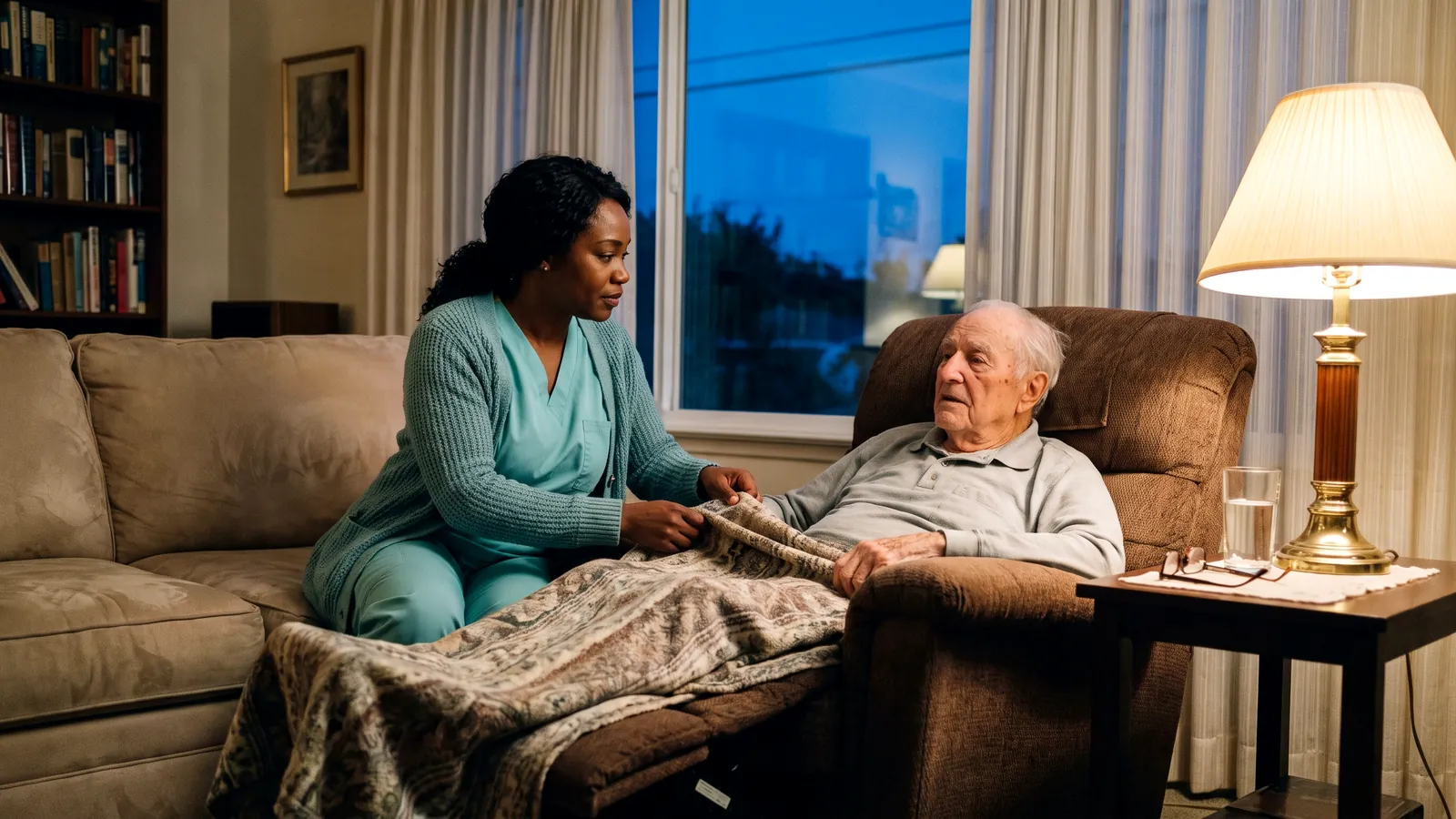
Companion care is non-medical help at home built around company and everyday life: conversation, meals, light housekeeping, errands, walks and medication reminders. Personal care adds hands-on help with the body, like bathing, dressing, toileting and moving safely from bed to chair. If your parent mainly feels lonely and the house is slipping, companion care is usually enough. If showers or the bathroom have become risky, they need personal care.
October 2026 · 11 min read · Around The Clock Home Services

That's the short answer. The longer one depends on your loved one, and on the small things you've been noticing on your visits. Maybe the fridge in her Torrance kitchen has three of the same yogurt, all expired. Maybe your dad in Redondo Beach hasn't left the house since his walking buddy moved away. Or maybe he's started skipping showers, and you suspect it's because the tub scares him.
Each of those is a different problem. Each one needs a different kind of help. And what your parent needs this spring may not be what they need next year. Below, we cover what companion care is, what hands-on care adds, how to tell which one fits your aging loved one today, and roughly what each costs.
We're Around the Clock Home Services, a non-medical home care agency in Redondo Beach, and we provide both. So we have no reason to steer you toward one over the other. If you'd rather just talk it through, call (310) 940-0191.
What is companion care?
Companion care is non-medical assistance for older adults and seniors who are mostly independent but are lonely, isolated, or starting to struggle with household tasks. A companion caregiver spends time with your loved one, keeps the home running, and keeps an eye on how they're really doing. It does not include hands-on help with bathing or toileting, and it never includes medical care.
As seniors age, pieces of a full life drop away one at a time. A good friend moves to be near her kids. The car keys go in a drawer. A spouse dies, and the afternoons get long and silent. Companion care services put someone back in that space: a familiar person who arrives when expected, pours the coffee, and listens to the whole story. Companion caregivers help bring back the routines that used to fill the week. Often a parent has felt isolated for months before anyone in the family picks up on it.
Companion care fits seniors who still manage most of their own day. For many of them, it's exactly enough. They can still shower and dress on their own and live independently in their own home. What they're missing is regular social interaction, a reason to cook a real meal, and someone who notices when something is off.
What does a companion caregiver do?
Day to day, companion caregivers handle a mix of company and daily tasks around the house. The specific services vary by care plan, but typical companion care services include:
- Conversation and emotional support. Coffee and the crossword, old photo albums, a favorite show, or just a listening ear. Providing emotional support is often the most valued part of the job.
- Meal preparation and company at the table, so meals get eaten instead of skipped.
- Light housekeeping: washing dishes, laundry, changing the sheets, tidying up.
- Grocery shopping and running errands, like a trip to the Trader Joe's on Pacific Coast Highway or picking up a prescription.
- Transportation to medical appointments, church, the senior center or a friend's house.
- Medication reminders, so doses don't get skipped.
- Walks and activities: a slow loop along the Esplanade, playing games like cards or board games, puzzles, gardening, music.
- A safer house: spotting clutter, a loose rug or a burned-out bulb before it causes a fall.
- Regular communication with family members, so you hear about changes early.
One South Bay son, Brian Lagerhausen, described his mother's caregiver in a review he left for us as "always on time and very receptive to my mother's needs from cooking to cleaning to walking her dog and much more." That's companion care in real life. It's ordinary, and it matters a lot.
Why does companionship matter so much?
Social isolation is a health issue, not just a mood. A National Academies report found that nearly one in four adults 65 and older is socially isolated, and it connects being isolated or lonely with a greater chance of heart disease, stroke, depression and dementia. Regular visits and meaningful conversation give an aging adult structure and a reason to get dressed in the morning. Someone to talk with a few times a week can ease that lonely feeling, keep old friendships going, and support emotional well-being, quality of life and overall well-being. For older adults worried about cognitive decline, social engagement and mental stimulation are worth taking seriously, too.
Stephanie M put it simply in her review: "my Grandmother loved her company." Companion care also gives family caregivers a break. If you've been the one stopping by every evening, a companion on Tuesdays and Thursdays is real time back, and our respite care page covers longer breaks. For a lot of families, though, the main goal is simpler: meaningful interactions and, over time, a meaningful relationship between your loved one and the companion.
What is personal care?
Personal care is hands-on, non-medical help with the basics of each day, which professionals call activities of daily living. That means help in the shower, getting dressed, shaving or brushing hair, using the toilet, eating, and moving safely, like getting from the bed to a chair or on and off the toilet. This caregiver does everything a companion does, plus the physical help that keeps your loved one clean, safe and comfortable in their own home.
Here's what this level usually adds on top of companionship:
- Bathing and showering, from standing by for safety to full help, with privacy protected.
- Dressing and grooming: getting clothes on, shaving, hair, teeth and skin care.
- Toileting and incontinence care, handled calmly and discreetly.
- Mobility and transfers: getting up from a chair, walking steadily, getting in and out of bed.
- Fall prevention throughout the house, especially in the bathroom.
It's still non-medical. Caregivers don't provide medical care: no injections, wound dressings or medication management. Those are medical tasks for nurses, certified nursing assistants, home health aides and other medical professionals, usually ordered by a doctor. Home health aides work under a home health agency, not a home care agency. Our home care vs. home health guide explains that line if your parent has both kinds of needs.
How is companion care different from personal care?
When families weigh companion care vs. personal care, the difference comes down to touch. Companion care helps with life around the person: company, meals, the house, errands and reminders. Personal care helps with the person's body: bathing, dressing, toileting and moving safely. The hands-on level includes everything companion care does, so it's the next step up rather than a separate service.
Conversation, activities, emotional support
Companion careYes
Personal careYes
Meal preparation and light housekeeping
Companion careYes
Personal careYes
Errands, grocery shopping, rides
Companion careYes
Personal careYes
Medication reminders
Companion careYes
Personal careYes
Bathing and showering help
Companion careNo
Personal careYes
Dressing, grooming, toileting
Companion careNo
Personal careYes
Transfers and hands-on mobility help
Companion careNo
Personal careYes
Medical care (wounds, injections, managing meds)
Companion careNo
Personal careNo
Who it fits
Companion careMostly independent, but lonely or slipping
Personal careNeeds physical help to stay clean and safe
| Companion care | Personal care | |
|---|---|---|
| Conversation, activities, emotional support | Yes | Yes |
| Meal preparation and light housekeeping | Yes | Yes |
| Errands, grocery shopping, rides | Yes | Yes |
| Medication reminders | Yes | Yes |
| Bathing and showering help | No | Yes |
| Dressing, grooming, toileting | No | Yes |
| Transfers and hands-on mobility help | No | Yes |
| Medical care (wounds, injections, managing meds) | No | No |
| Who it fits | Mostly independent, but lonely or slipping | Needs physical help to stay clean and safe |
Which one does your loved one need?
Start with one question: can your mom or dad bathe, dress, use the toilet and get up from a chair safely without anyone's hands on them? If yes, companion care probably fits. If any of those is shaky, or you've already started helping, they need hands-on care, even if they mostly want company too.
Signs companion care is enough for now:
- Days go by without a real conversation, especially after losing a spouse.
- Meals turn into snacks, and the fridge has old food in it.
- Mail, dishes and laundry are piling up.
- They've stopped driving, so errands and social events have dropped off.
- They sound flat on the phone, or call you far more, or far less, than before.
Signs it's time for hands-on help:
- They've started skipping showers, or wear the same clothes several days running.
- You've noticed a near fall in the bathroom, or bruises they can't explain.
- Getting up from a low couch or the toilet takes several tries.
- There are signs of incontinence they're trying to hide.
- You, or another family member, have quietly become the person who helps with bathing.
That last one deserves a pause. Plenty of family caregivers end up helping a parent shower long before anyone gives it a name. It's often awkward for both of you, and it's a real fall risk if you haven't been shown how to do it safely. Handing it to a trained caregiver lets you go back to being a son or daughter.
Can your loved one start with companion care and add personal care later?
Yes. In fact, it's one of the most common ways families begin. A mom who insists she doesn't need help will often say yes to someone who comes for lunch and a walk. That feels like a visit, not care. Months later, if the shower starts to feel risky, the plan can grow to include bathing or dressing. Ideally the same caregiver stays on. Your mom already trusts her, and nobody new has to learn the house.
That's how we handle it. Because we offer both companionship care and personal care, moving from one to the other usually means an updated care plan, not a new agency. Each client has a small team of 2 to 3 regular caregivers, plus a backup you meet first, so your parent always sees someone they know.
Not sure which level fits? We'll do a free assessment at your parent's home or over Zoom, and tell you honestly. Call (310) 940-0191 or send us a note.
How much does companion care cost?
Companion care cost depends mainly on hours. It's usually billed hourly, and since many families only need a few visits a week, it's often the most affordable kind of home care. Hands-on care is billed the same way but tends to need more hours. In California, a non-medical caregiver has run about $40 an hour, the state median in CareScout's 2025 Cost of Care Survey. The same survey reports a national median hourly rate too, but South Bay families should lean on the California number.
Rates for both levels of care services at an agency usually fall in the same range, because the same caregivers often do both. What changes the total is the schedule. Two four-hour visits a week cost far less than daily mornings. Companion care is also generally less expensive than skilled home health, since no nurse or therapist is involved. It's worth planning ahead, too: according to the Administration for Community Living, someone turning 65 today has almost a 70% chance of needing some type of long-term care services. Our in-home care cost guide has more South Bay detail.
Does Medicare pay for companion care?
No. Medicare doesn't pay for companion care, homemaker services or other custodial care services when that's the only help someone needs. According to Medicare.gov, home health coverage is for part-time skilled care a doctor orders. Long-term care insurance and VA benefits sometimes help with non-medical care, and Medi-Cal's IHSS program may cover some hours for people who qualify. Most families pay privately.
How do you choose companion caregivers you can trust?
Ask how the agency screens caregivers, and look it up yourself. In California, agency caregivers must be listed on the state's Home Care Aide Registry after a fingerprint background check. Ask about experience and formal training, whether caregivers are employees, who covers sick days, and whether you can meet the caregiver before the first visit.
Our caregivers are employees, as California requires, not contractors. Every one is a state-registered home care aide with FBI and DOJ fingerprint background checks, a TB test and at least two years of experience, and we're bonded and insured. We match on personality and interests, too. A retired machinist from Gardena who loves the Dodgers may click with a different companion than a former teacher in Palos Verdes who wants help in her garden.
Frequently asked questions
What's the difference between a caregiver and a companion?
A companion focuses on company, household tasks, errands and reminders. "Caregiver" is the broader word, and a caregiver providing personal care also helps hands-on with bathing, dressing, toileting and transfers. At many agencies, the same trained caregiver can do both, and the care plan sets which tasks are included.
What are companion care services?
Companion care services are non-medical help at home: conversation and emotional support, meal preparation, light housekeeping, grocery shopping and errands, rides to appointments, medication reminders, walks and activities. They're meant for older adults who are mostly independent but lonely, isolated or starting to fall behind around the house.
Can a companion caregiver help with bathing?
Not under a companion care plan. Bathing, toileting and dressing are hands-on tasks. If your parent starts needing that help, the plan should move up a level, which still includes everything a companion does. Ask the agency whether the same caregiver can stay on when that happens.
Who pays for companion care?
In most cases, the family pays out of pocket. Medicare won't cover companion care. A long-term care insurance policy sometimes will. Eligible veterans may get help through VA benefits, and for people who qualify, Medi-Cal's IHSS program may pay for some in-home hours. Rules differ by program, so check with each one directly.
How many hours of companion care does my parent need?
Start with what's falling behind. For some parents, two or three visits a week of a few hours each is plenty: lunch together, a grocery run, a walk around the block. Other families want a short visit every day, just so someone lays eyes on Mom. A good agency suggests the schedule that helps, not the biggest one it can sell.
Not Sure Which Kind of Care Your Parent Needs? Let's Talk.
You don't have to figure this out alone, and you don't have to get it perfect on day one. Tell us what you've been noticing about your loved one, and we'll tell you honestly whether companion care is enough or whether it's time for more hands-on help. Fill out our contact form, or call (310) 940-0191.
Around the Clock Home Services is a licensed non-medical home care agency at 511 Ruby St in Redondo Beach, serving Torrance, Redondo Beach, Manhattan Beach, Hermosa Beach, the Palos Verdes Peninsula, El Segundo and the rest of Los Angeles County.
Want to talk it through with someone who has seen this before?
Tell us what has been happening at home. The call is free, the in-home assessment is free, and there is nothing to sign to get answers.