Insights · Family caregivers
Respite Care for Elderly Parents in the South Bay: What It Is and How to Book It
Respite care for elderly parents is short-term care that gives the family caregiver a real break, for a few hours, a day, a weekend or a week.
October 2026 · 9 min read · Around The Clock Home Services

Most family caregivers we talk to can't remember their last real day off. Not a quick trip to the store while Dad naps, but a whole day where nobody needed them and no other responsibilities were waiting. Respite care for elderly parents fixes that: a trained caregiver steps in at home so you can rest, work, take a vacation or see your own doctor, and your loved one keeps their routine and stays in good hands. In Torrance, Redondo Beach and the rest of the South Bay, most in-home respite is booked by the hour or the day, and the way to know your cost is a free, no-pressure written quote.
If you need a break soon, tell us what's going on or call (310) 940-0191. A person answers 24 hours a day, and we handle short-notice respite regularly.
What Is Respite Care for Elderly Adults?
Respite care is temporary care for an older adult so the primary caregiver can take a break. The National Institute on Aging describes it as short-term relief lasting from a few hours to several weeks, provided at home, in a care facility or at an adult day center. Your parent gets steady care, and you get time back.
The word "respite" just means rest. You've been carrying the load, and someone qualified carries it for a while. Go for a walk on the Strand, get some exercise, meet a friend for coffee, see your own doctor, or just sit somewhere quiet and relax. It all counts as self care, and none of it is selfish. The NIA's overview of respite care is worth a read if you want the official version.
Respite isn't a sign you've failed at caregiving, and there's nothing wrong with needing one. It's what keeps caregiving possible, and it lets you recharge and come back to your loved one rested instead of running on fumes.
What Are the Different Types of Respite Care?
There are three main types of respite care: in-home respite, where a caregiver comes to the house; adult day programs, where your loved one spends the day at a center; and short stays in a facility like assisted living. Emergency respite covers sudden gaps. Each one fits different needs, schedules and budgets, depending on how long you'll be away.
Type of respiteIn-home respite
Where it happensYour parent's own home
Good forKeeping the routine steady, especially with dementia
Type of respiteAdult day health care
Where it happensA community center, weekdays
Good forSocial time and structure while you work
Type of respiteShort facility stay
Where it happensAssisted living or nursing home
Good forLonger trips when home care isn't practical
Type of respiteEmergency respite
Where it happensUsually at home, arranged fast
Good forWhen the family caregiver gets sick or has a crisis
| Type of respite | Where it happens | Good for |
|---|---|---|
| In-home respite | Your parent's own home | Keeping the routine steady, especially with dementia |
| Adult day health care | A community center, weekdays | Social time and structure while you work |
| Short facility stay | Assisted living or nursing home | Longer trips when home care isn't practical |
| Emergency respite | Usually at home, arranged fast | When the family caregiver gets sick or has a crisis |
For people living with dementia, in-home respite is often the gentlest option. The house stays the same, the photos on the wall stay the same, and there's no new building to get used to. Some families mix forms of respite care, like an adult day program on weekdays and a caregiver at home on Saturdays.
What Does In-Home Respite Care Include for the Person Receiving Care?
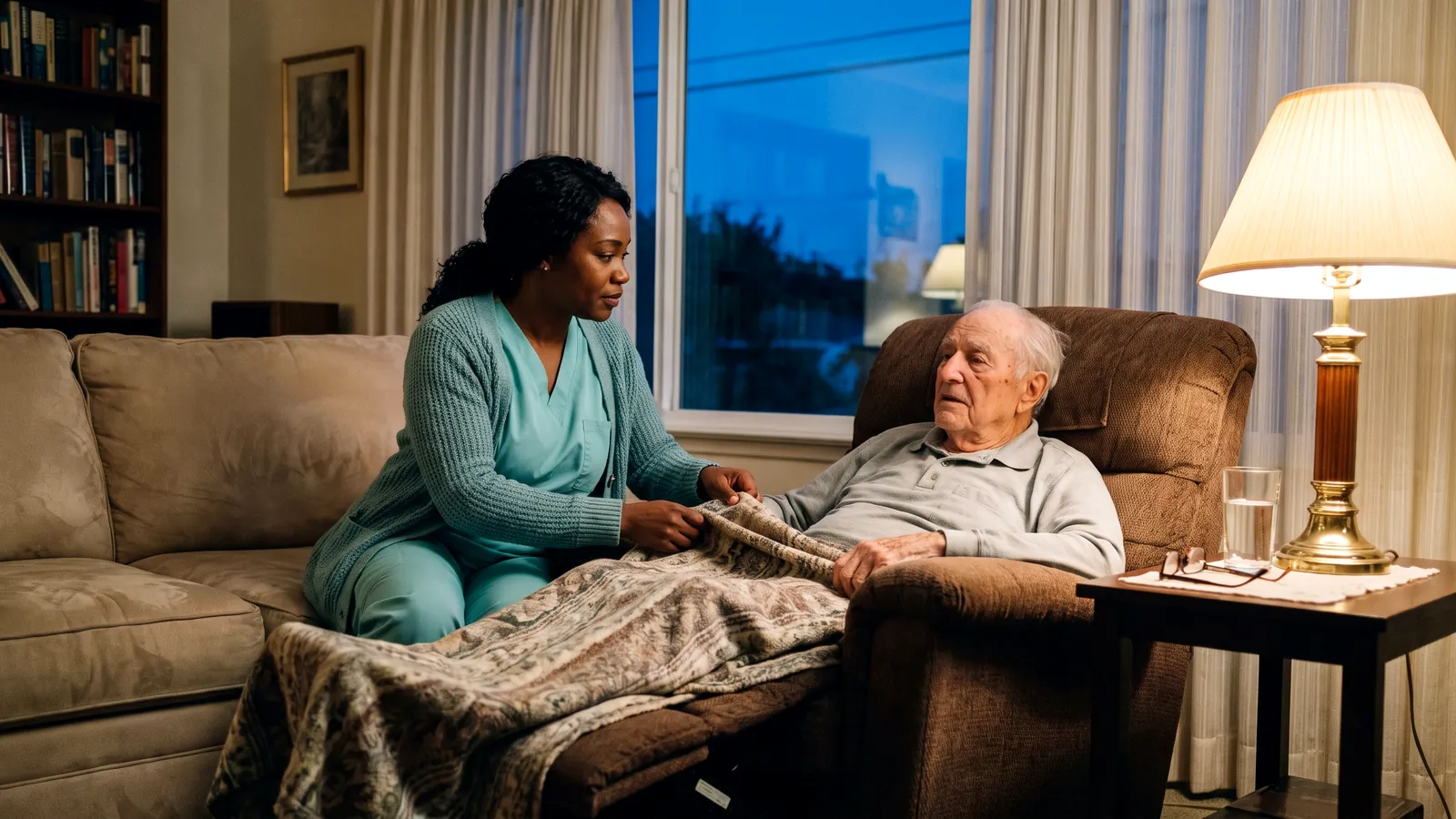
In-home respite care services include whatever your loved one's needs are while you're away: personal care like bathing and dressing, meals, medication reminders, companionship, light housekeeping and supervision. Overnight, weekend and live-in respite let you sleep or travel. A good agency takes a detailed handoff from you first, so your loved one's routine is never guessed at.
Our respite care covers:
- Coverage by the hour, the day, the week, or on a standing schedule
- A full handoff before the first shift: meals, medications, sleep, quirks, what soothes and what upsets
- Personal care, meals and medication reminders
- Companionship and activity, so the day isn't just supervision
- Overnight, weekend and live-in respite when you're away longer
- Notes on how it went, waiting for you when you get back
That handoff matters more than people expect, because quality care depends on the details. After two years of caregiving, you know that Mom only eats her eggs scrambled soft and gets anxious if the TV is too loud. The respite caregiver should know that too, so you can actually focus on the trip, the deadline or the nap you've been missing.
How Do You Know It's Time for Respite Care?
It's time for respite care when you can't remember your last day off, your own health is slipping, or you feel resentful, exhausted or short-tempered with the person you love. A planned trip, a surgery or a family event coming up is also a good reason to book ahead. Waiting until you hit the wall makes everything harder.
Signs the caregiver needs a break:
- You're tired even after sleeping, or you're not sleeping at all
- You've stopped seeing friends or doing anything just for you
- You're skipping your own medical appointments
- Small things make you snap, and then you feel guilty
- You feel like nobody else could possibly do this
Caregiver burnout creeps up. First it's physical fatigue, then it's missing the rest of your life, and research backs that up: the Alzheimer's Association reports that 59% of dementia caregivers rate their emotional stress as high or very high. The California Caregiver Resource Centers offer free support for family caregivers across the state, including help spotting burnout early.
Sometimes respite also shows you that seniors in your family need more assistance than you realized. Watch for new bruises with vague explanations, medications that don't add up, a refrigerator with little fresh food, or confusion and wandering at night. If those sound familiar, regular care or 24-hour home care may be the next step.
How Much Does Respite Care Cost in Torrance and the South Bay?
Traditionally, in-home respite has been billed at the same hourly rate as other home care: a California median of about $40 an hour in CareScout's 2025 survey, or roughly $160 for a four-hour afternoon. Your real cost depends on the hours, your loved one's needs and the schedule, and our quotes typically come in lower than traditional market rates.
Here's the traditional math for a couple of common breaks. These are market medians, not our prices.
Respite exampleOne four-hour afternoon at home
Traditional cost at the California medianabout $160
Respite exampleOne weekday at an adult day center
Traditional cost at the California medianabout $94
| Respite example | Traditional cost at the California median |
|---|---|
| One four-hour afternoon at home | about $160 |
| One weekday at an adult day center | about $94 |
Source: CareScout Cost of Care Survey 2025 data tables. Actual rates vary by agency, schedule and level of care.
Please don't let a table put you off. Providers charge different rates in different situations, and a single afternoon off is often far more affordable than families expect. You still get a caregiver matched to your loved one, a full handoff, and a family-run agency that answers any hour. Overnight and live-in respite are quoted differently from daytime hours, and cost always depends on the schedule. For a fuller picture, see our guide to in-home care cost in Torrance and the South Bay. The only way to know your number is a free written quote, so ask us for yours.
Does Medicare Pay for Respite Care?
Original Medicare pays for respite care only through the hospice benefit. In that case it covers a short inpatient respite stay in a facility, and you may pay 5% of the Medicare-approved amount. It doesn't pay for in-home respite or ongoing personal care outside of hospice, which is what most family caregivers are looking for.
Medicare.gov's hospice care page spells this out. Outside of hospice, Medicare treats most respite as long-term custodial care, which it doesn't cover. Some Medicare Advantage plans include limited in-home support as an extra benefit, so it's worth calling your plan and asking.
Who Else Helps Pay for Respite Care in California?
Other options to pay for respite care include long-term care insurance, VA respite benefits for eligible veterans, Medi-Cal waiver programs, and the National Family Caregiver Support Program through your local Area Agency on Aging. Some programs have waiting lists, so it's smart to apply early, even if you're paying privately for now.
- Veterans: The VA offers home respite for veterans who need help with daily activities. According to the ARCH National Respite Network, VA respite is ordinarily limited to 30 days a year.
- Area Agency on Aging: If you're caring for someone over 60, or anyone with Alzheimer's, the National Family Caregiver Support Program may help. The Eldercare Locator connects you to your local office.
- Medi-Cal waivers: Some home and community-based waivers include respite. Check eligibility with your county.
- Long-term care insurance: Many policies cover in-home care, including respite. Read the elimination period closely.
Each program has its own rules about which seniors and family caregivers qualify, so ask early and keep notes.
How Do You Book In-Home Respite Care?
To book respite care, call the agency, describe what you need and when, and schedule a free in-home assessment. The agency should meet your loved one, take a detailed handoff, write a care plan you approve, and introduce the caregiver before the first shift. A week's notice is ideal, but we handle short-notice and emergency respite regularly.
Here's how it works with us:
- You call and tell us what's going on. Five minutes, in your own words. A real person answers, day or night.
- We meet with you in person, or over Zoom if you prefer. Then we come to the home, free, to look at safety and routine and meet your loved one.
- You approve the plan in writing. Nothing starts until you've read it, and there's no long-term contract.
- We match a caregiver and introduce them. Matched on skill and temperament, not just assigned.
If your loved one resists "a stranger in the house," keep it small and specific. "Someone who comes Tuesday mornings so I can work" is easier to accept than "a caregiver." Let your loved one choose the days and the tasks, and lead with your own need for a break rather than their decline. Many seniors will accept help to relieve a son or daughter long before they'll accept it for themselves.
Can Respite Care Turn Into Ongoing Care?
Yes, and it often does. Many families start with a single week of respite before a trip and realize how much better everyone feels with regular help. From there, respite can become a standing weekly break, daily visits or full-time care, with the same caregiver if the match works. It grows only as fast as your family wants.
It's not unusual for a parent in Redondo Beach or Torrance who fought the idea for months to start asking, "Is she coming Tuesday?" If needs grow, the plan can include personal care, companionship care or memory care.
Frequently Asked Questions
How long can respite care last?
Anywhere from a few hours to several weeks. In-home respite can be booked by the hour, the day or the week, set up as a regular weekly break, or arranged as live-in care while you travel.
How far ahead do I need to book respite care?
A week of notice makes scheduling easy. We handle short-notice and emergency respite regularly, so call even if you need someone sooner.
Will the respite caregiver follow our routine?
They should. We take a detailed handoff from the family caregiver before the first shift, covering meals, medications, sleep and what helps your loved one stay calm.
Is respite care available overnight or on weekends?
Yes. Overnight, weekend and live-in respite are all available, which is often what family caregivers need most.
What are the disadvantages of respite care?
Some parents resist a new face at first, and a change in routine can be unsettling, especially with dementia. A good handoff, a gradual introduction and the same caregiver each time help a lot.
What is the difference between respite care and home care?
Respite care is home care with a specific purpose: giving the family caregiver time off. The caregiver, the services and the quality are the same. The difference is that respite is short-term or scheduled around your break.
Are Nights Becoming the Hardest Part?
If the reason you need a break is that you haven't slept properly in weeks, a short respite may not be enough. Our companion post on 24-hour and live-in care in Torrance and the South Bay explains overnight caregivers, awake shift care and live-in care, and how fast each one can start.
Take the Break You've Been Putting Off
You don't have to wait until you're completely worn out to ask for help. A few hours of respite care a week can change how the whole month feels, for you and for your loved one. We typically quote lower than traditional market rates, and after 30+ years we don't cut corners on care. Tell us what's going on and we'll get back to you quickly with dates and a free written quote, or call (310) 940-0191 any hour.
Around the Clock Home Services is a family-owned, non-medical home care agency (California HCO License #194700757) providing respite care in Torrance, Redondo Beach, Manhattan Beach, Hermosa Beach, the Palos Verdes Peninsula and across the South Bay for 30+ years. Request a free care assessment.
Want to talk it through with someone who has seen this before?
Tell us what has been happening at home. The call is free, the in-home assessment is free, and there is nothing to sign to get answers.